![Vivid Gold - Video Game Outlet [KE]](http://vividgold.co.ke/cdn/shop/files/vivid_gold_Inverted_Color_Transparent_bg_1.svg?v=1776417429)


Recent Articles


Xbox Isn't Dead: How New Leadership Just Silenced the Critics
13 Jun 2026
Why Most PC Gamers Are Choosing 1440p Over 4K
26 May 2026Why Most PC Gamers Are Choosing 1440p Over 4K
26 May, 2026
4K gaming looks incredible. The sharpness, the detail, the sheer visual clarity on paper, it's the ultimate way to play. But here's the reality: most PC gamers are still choosing 1440p instead. And honestly, that choice makes perfect sense. While 4K might be the dream, 1440p is what most PC gamers actually want to live with every day. Let's break down why. The Performance Trade-Off: Visuals vs. Frame Rates While 4K delivers undeniably sharper visuals, it comes with a massive performance cost. Driving four times as many pixels as 1080p (and significantly more than 1440p) demands serious GPU power. Resolution Total Pixels Relative GPU Demand 1080p ~2 million Baseline 1440p ~3.7 million ~1.8x 1080p 4K ~8.3 million ~4.5x 1080p The result of that demand: Lower frame rates: Even high-end GPUs struggle to maintain 120+ FPS at 4K in demanding titles. Higher temperatures: More pixels pushed = more heat generated. More expensive hardware: You're paying a premium just to keep the game playable. The Sweet Spot: Why 1440p Hits Perfectly 1440p sits right in the middle between visual quality and performance and for most gamers, that's the ideal balance. What 1440p delivers: Sharp, detailed visuals: Games still look fantastic, with clear textures and minimal aliasing. High frame rates: You can comfortably push 120fps, 144fps, or even 240fps without needing a flagship GPU. Lower system requirements: A mid-range graphics card can handle 1440p gaming beautifully. It's the resolution where "good enough" meets "actually achievable" for most budgets. The Cost Problem: 4K Hardware Is Getting Insane To fully enjoy consistent 4K gaming especially at high refresh rates you generally need top-tier hardware: RTX 4080 or 4090: Current generation flagships capable of 4K/120fps in many titles. Future GPUs: Even newer cards will be expensive at launch. Complete System Cost: A 4K-ready PC can easily exceed $2,500–$3,000. Compare that to 1440p: Mid-range GPUs like RTX 4070, RX 7800 XT: More than capable of excellent 1440p performance. Budget-friendly builds: You can build a solid 1440p rig for half the cost of a 4K machine. The price gap is real, and it's growing. As GPU prices continue to climb, 1440p becomes an increasingly sensible choice. Competitive Gaming: Frame Rate Over Pixels For competitive gamers those playing Valorant, Counter-Strike, Apex Legends, Call of Duty, or Overwatch smoother gameplay matters far more than extra pixels. Higher frame rates provide: Better responsiveness: Your inputs register faster. Reduced input delay: Every millisecond counts in competitive play. Smoother motion tracking: Easier to follow fast-moving targets. A genuine competitive advantage: Higher refresh rates (144Hz, 240Hz, 360Hz) are standard in esports. At 1440p, you can push those high frame rates consistently. At 4K, even the best GPUs struggle to maintain competitive-level refresh rates in demanding titles. The Reality Check: What Most Gamers Actually Use Steam's hardware survey consistently shows that the majority of PC gamers are not on 4K. The most popular resolutions remain 1080p and 1440p. Resolution Typical User 1080p Budget builds, esports-focused players, older monitors 1440p The enthusiast sweet spot, high refresh rate gaming 4K High-budget builds, content creators, single-player immersion 4K has its place especially for cinematic single-player experiences on large, high-quality displays. But for everyday gaming? Most players are voting with their wallets, and they're choosing 1440p. The Verdict: 4K Is the Dream, 1440p Is the Reality Here's the honest breakdown: If You Want... Choose... Maximum visual fidelity for single-player games 4K (if budget allows) High frame rates for competitive play 1440p The best balance of visuals and performance 1440p To save money on GPU and monitor costs 1440p To future-proof for several years 1440p (easier to drive for longer) 4K gaming looks amazing, but it demands flagship hardware, sacrifices frame rates, and costs significantly more. For most PC gamers including enthusiasts who care about both visuals and responsiveness 1440p is simply the smarter choice. What's Your Resolution? Are you team 1440p or team 4K? What resolution do you actually game on, and why? Let us know in the comments!

How to Choose a Gaming Keyboard: 4 Features That Actually Matter
26 Feb, 2026
Your keyboard is your primary connection to your games. It's the tool you use to issue every command, execute every combo, and communicate with every teammate. Choosing the right one completely changes how you play, how you type, and even how comfortable your setup feels for hours of gaming. But with so many options mechanical vs. membrane, wired vs. wireless, 60% vs. full size it's easy to get overwhelmed. Here are the four essential features you need to understand before you buy your next gaming keyboard. 4. Connectivity: Wired or Wireless? The first major decision is how your keyboard connects to your PC. Wired Keyboards (USB): The traditional choice. Wired keyboards offer zero latency, which is critical for competitive gaming where every millisecond counts. They also never need charging, making them a "plug and forget" solution. The downside? Cable management and slightly less desk freedom. Wireless Keyboards: Modern wireless technology (like 2.4GHz dongles or low-latency Bluetooth) has closed the gap significantly. A clean, cable-free desk looks incredible and gives you freedom to move. However, you'll need to manage battery life whether that's rechargeable batteries or a built-in pack that needs charging every few weeks. The Verdict: Choose wired for uncompromised competitive performance. Choose wireless for a cleaner aesthetic and if you value desk freedom over absolute zero latency. 3. Build Quality: Plastic vs. Premium A keyboard's feel and longevity are largely determined by its construction and materials. Cheap Plastic Frames: Entry-level keyboards often use lightweight plastic. They can feel flimsy, flex during intense gaming sessions, and keycaps may wear down or become shiny over time. Heavier, Premium Frames: Look for keyboards with metal top plates or dense plastic construction. They feel solid under your hands and won't twist or flex. Keycaps: This matters more than you think. Cheaper keyboards use ABS plastic keycaps that can develop an oily, shiny shine over months of use. Higher-quality keyboards use PBT keycaps, which are thicker, more textured, and far more resistant to wear and shine. They feel better and last significantly longer. The Verdict: Prioritize a keyboard with a solid frame and PBT keycaps if you want a board that feels premium and lasts for years. 2. Form Factor: Full Size, TKL, or 60%? Keyboards come in different sizes, and the right one depends on your desk space and what keys you actually use. Full Size (100%): Includes everything: alphanumeric keys, function row, navigation cluster (Home, End, etc.), and a dedicated number pad. Best for data entry, accounting, or if you genuinely use the numpad regularly. Tenkeyless (TKL / 80%): Removes the number pad. This gives you more room for mouse movement—a huge advantage for low-sensitivity gamers—while keeping the function and navigation keys. The most popular choice for gamers who want space without sacrificing functionality. 60% Keyboards: A super compact layout that removes the number pad, function row, and navigation cluster. All those functions are accessed via layers (holding the Fn key). Ideal for minimalists, streamers who need maximum mouse space, or portable setups. The Verdict: Full Size if you need a numpad for work. TKL for the best balance of space and functionality. 60% for maximum desk space and a clean, minimalist aesthetic. 1. Switch Type: The Heart of the Keyboard This is the most important decision. The switches determine how the keyboard feels, sounds, and responds. Mechanical keyboards offer three main types: Clicky Switches (e.g., Cherry MX Blue): These provide both a tactile bump (you feel the actuation point) and an audible click sound. They are satisfyingly loud and give clear feedback. Perfect if you love that classic "typewriter" sound, but potentially annoying for streamers or shared spaces. Tactile Switches (e.g., Cherry MX Brown): These offer the tactile bump—you feel when the key activates—but without the loud click. They provide a nice balance of feedback for both gaming and typing, making them an excellent all-rounder. Linear Switches (e.g., Cherry MX Red): These are smooth and quiet from top to bottom with no bump and no click. They are the preferred choice for many competitive gamers because they allow for rapid, smooth double-taps and key presses without extra resistance or noise. The Verdict: Choose Clicky if you love the sound and tactile feel (and game alone). Choose Tactile for the best all-around balance of gaming and typing feedback. Choose Linear for competitive gaming where speed and smoothness are paramount. Conclusion: Your Keyboard, Your Rules At the end of the day, the "best" gaming keyboard isn't the most expensive or the one with the most RGB lights. It's the one that fits your play style, your space, and your comfort. Pick the connectivity that matches your need for speed or aesthetics. Choose build quality that feels premium and will last. Select the form factor that gives you the right desk space. And most importantly, decide on the switch type that feels right under your fingers. Get these four things right, and you won't just have a keyboard you'll have the perfect partner for every game you play. What's your current keyboard setup? Do you prefer clicky, tactile, or linear switches? Let us know in the comments!

The Three Games That Exposed Ubisoft's Slow Decline
20 Feb, 2026
Ubisoft didn't collapse overnight. There was no single catastrophic failure that brought the French publisher to its knees. Instead, it was a slow, agonising fade a gradual draining of identity, innovation, and player trust from the very franchises that built its empire. For years, Ubisoft was synonymous with the open-world genre. Assassin's Creed, Far Cry, Watch Dogs these were titles that defined an era. But somewhere along the way, the magic curdled. Passion projects became assembly-line products. Ambition was replaced by checklists. Here are the three games that didn't just fail, they exposed exactly what Ubisoft had become. 3: Watch Dogs: Legion (2020) – The Promise That Broke The Concept: "Play as anyone." Recruit any NPC you see in a near-future London to your resistance movement. A revolutionary idea that promised infinite replayability and emergent storytelling. The Reality: A hollow execution of a brilliant concept. The "play as anyone" mechanic quickly revealed its limitations. Most characters felt like interchangeable assets—generic NPCs with shallow voice lines, no meaningful backstory, and zero emotional connection to a narrative that was already struggling for identity. The emotional stakes that made the first Watch Dogscompelling were completely absent. What It Exposed: Marketing Over Substance: Ubisoft sold a tech demo as a game. The core idea was flashy enough to dominate pre-release coverage, but the actual depth wasn't there. Identity Crisis: The first Watch Dogs felt bold and gritty. Legion felt like an experiment that shipped before it was fully baked, revealing a studio more interested in concepts than craft. 2: Far Cry 6 (2021) – The Formula That Finally Broke Players The Concept: A sprawling Latin American revolution led by a charismatic villain played by the legendary Giancarlo Esposito. On paper, this had all the ingredients for a franchise high point. The Reality: A perfectly functional, utterly soulless checklist of Ubisoft's greatest hits. It was another map covered in icons. Another grind to liberate outposts. Another "climb the tower to reveal the region" loop. Esposito's immense talent was wasted in a role that barely interacted with the player, proving that a great actor cannot save shallow writing. What It Exposed: Ubisoft Fatigue: By 2021, the formula had been running on fumes for years. Far Cry 6 didn't innovate; it iterated. And players were finally, openly tired of it. Repetition Over Reinvention: Instead of asking "what does Far Cry need to become?", Ubisoft asked "how can we make the same thing, but bigger?" The result was bloated playtimes with diminished returns on meaning. 1: Skull and Bones (2024) – The Symbol of Systemic Failure The Concept: A AAA pirate RPG where you command your own ship, build a criminal empire, and rule the seas. Marketed for years as the next big thing. The Reality: The ultimate symbol of Ubisoft's mismanagement. After nearly a decade of development, multiple reboots, and endless delays, Skull and Bones launched as a shallow, grindy, live-service skeleton of a game. The ultimate insult? It was immediately and unfavorably compared to Assassin's Creed IV: Black Flag a game Ubisoft itself had made in 2013 which still offered a richer, more engaging pirate experience. What It Exposed: Mismanagement at Scale: This wasn't just a bad game; it was a monument to corporate dysfunction. How could a company spend so much time and money and deliver something that felt older and shallower than a game from a decade prior? The End of Trust: For many longtime fans, Skull and Bones was the final straw. It wasn't another disappointment it was proof that Ubisoft, as a creative force, was no longer capable of delivering on its promises. Conclusion: Death by a Thousand Checklists Ubisoft's decline isn't a story of one catastrophic failure. It's a story of a company that slowly lost the ability to surprise, innovate, or trust its players' intelligence. These three games mark the milestones of that descent: Watch Dogs: Legion showed they could no longer execute on a brilliant idea. Far Cry 6 proved they were trapped in their own exhausted formula. Skull and Bones revealed the rot ran all the way to the core of their development culture. The question now isn't whether Ubisoft can recover it's whether they remember what made them special in the first place. Which Ubisoft game was the moment you realized the company had lost its way? Let us know in the comments.

Beyond Call of Duty: Discover the Best Offline Modded Shooters
10 Feb, 2026
For a generation, the Call of Duty formula linear missions, cinematic set-pieces, and constant forward momentum defined the shooter campaign. But this design came at a cost: a focus on spectacle over systems, and consumption over player agency. A thriving, passionate underground never accepted this as the peak. In the world of PC modding, shooters evolved differently. Freed from the constraints of mass-market appeal, modders have created profound, challenging, and deeply replayable experiences that cater to specific, demanding playstyles. If you crave more than just another thrill ride, these are the best offline modded shooters, categorized by the experience they deliver. 1. For Immersive Worlds: The Half-Life Legacy (Story & World-Building) If your ideal shooter is one where the world is the main character, the Half-Life modding scene remains unparalleled. The Foundation: The original Half-Life and its masterpiece remake, Black Mesa, are masterclasses in environmental storytelling and immersive sim-lite design. The Modded Evolution: Mods like Cry of Fear (a standalone horror masterpiece), Azure Sheep, or They Hunger don't just add levels; they recontextualize the entire experience. They prioritize atmosphere, deliberate pacing, and environmental puzzles over sheer firepower. The Philosophy: These mods operate on a key assumption: the player wants to exist in the world, to uncover its secrets and feel its history, not just sprint to the next checkpoint. They offer a slow-burn, offline narrative depth that most modern shooters have abandoned in favor of relentless pacing. 2. For Systemic Freedom: The STALKER-verse (Open-World RPG Shooters) This is where the modding community has achieved something revolutionary. The S.T.A.L.K.E.R.series, already a cult classic for its bleak, atmospheric "Zone," has been transformed by mods into the ultimate systemic survival-shooter RPG. The Mods: S.T.A.L.K.E.R. Anomaly (and its ultra-refined cousin, GAMMA) are free, standalone overhauls. They are not mere graphical upgrades; they are complete philosophical redesigns. The Depth: These mods introduce deep survival mechanics: weapon degradation that demands constant maintenance, a detailed medical system for treating specific injuries, a hunger/thirst/sleep cycle, and an AI-driven world that operates entirely independently of the player. The Appeal: This is the antithesis of a hand-holding power fantasy. The Zone is indifferent, brutal, and rewarding only to the prepared. It's for players who want their shooter to be a test of adaptation and knowledge, where success comes from understanding complex systems, not just having good aim. 3. For Pure Mechanical Mastery: The DOOM Eternal Playground (Fast Movement & Arena Combat) If your satisfaction comes from flawless execution, perfect movement, and mastering a combat ballet, modern DOOM (2016 and Eternal) provides a near-perfect sandbox—and the modding community sharpens it to a razor's edge. The Foundation: DOOM Eternal is already a peerless masterpiece of combat design, built on a "push-forward" loop of aggression, resource management, and movement. The Modded Challenge: Mods like the Horde Mode mod, custom master levels, and difficulty overhauls (e.g., The Ancient Gods Part 3 - Reimagined) remove any remaining safety nets. They demand absolute precision, weapon switching, and situational awareness. The Philosophy: These mods challenge the modern axiom that "accessible" equals "better." They argue that true depth and satisfaction come from a skill ceiling that is miles high. It's a pure, offline test of reflexes and tactical execution that feels more like a competitive sport than a casual story. 4. For Structured Narrative: The Immersive Sim Revival (Mission-Driven Stories) For players who want a curated, mission-based experience with strong narratives and meaningful choices, the legacy of immersive sims lives on through mods. The Foundation: Games like System Shock 2, Deus Ex, and Thief: The Dark Project. The Modded Legacy: These communities have produced staggering amounts of fan-made campaigns and missions for decades. The System Shock 2 community patch and mods like The Dark Mod (for Thief-style gameplay) offer entirely new, professionally crafted stories that rival the originals in atmosphere and clever design. The Philosophy: This style proves that a powerful narrative emerges from player choice and environmental discovery, not just pre-rendered cutscenes. These mods offer replayable, intellectually engaging campaigns where your approach (stealth, combat, hacking) genuinely shapes the outcome, providing a narrative depth most scripted shooters can't match. Conclusion: The Underground That Refuses to Compromise The world of offline modded shooters isn't a nostalgia trip. It's a thriving alternate timeline for the genre—one where depth, challenge, and player agency were never sacrificed at the altar of accessibility and cinematic presentation. These experiences answer a simple question: What do you want from a shooter? A world to get lost in? Play a Half-Life mod. A harsh system to survive? Boot up STALKER GAMMA. A skill-based arena to master? Mod your DOOM Eternal. A clever story to outthink? Revisit System Shock 2 with new campaigns. They don't ask for permission from trend charts. They offer a simple trade: meet them on their terms of complexity and freedom, and they will reward you with some of the most memorable and personalized shooter experiences possible. Which modded shooter philosophy speaks to you? Are you a systems survivalist, an arena master, or an immersive storyteller?

If You Own Games on Steam, Is There a Reason to Use GOG?
05 Feb, 2026
If you're a PC gamer, you live on Steam. It's the undisputed champion: the largest library, seamless updates, robust social features, and legendary sales. So, the question is valid: if your entire library is on Steam, is there any practical reason to use GOG? The answer is a resounding yes. GOG isn't trying to be Steam. It's offering a fundamentally different value proposition that appeals to a specific, important type of gamer: the one who values true ownership, preservation, and hassle-free classics. Let's break down the three key reasons why maintaining a GOG library alongside your Steam account is a smart move. 1. DRM-Free Ownership: You Actually Own the Game This is GOG's flagship feature and the single biggest philosophical difference between the two platforms. On Steam: You purchase a license to access a game through the Steam client. Your access is contingent on Steam's servers, your account's standing, and the publisher's ongoing presence on the platform. If any of those fail, your game library is at risk. On GOG: You purchase the game itself. When you buy a title, you can immediately download a standalone, offline installer (an .exe file). You can back this file up on a hard drive, USB stick, or cloud storage. You can install and play it on any compatible PC, forever, with no launcher, login, or online check required. Why This Matters: It’s about preservation and control. Games can be delisted due to licensing issues (e.g., Alan Wake pre-remaster). Services can theoretically shut down. GOG ensures that once you buy a game, it’s yours in the most tangible digital sense possible. For archival-minded gamers, this is invaluable. 2. Classic Games That Just Work (No Tinkering Required) Steam's approach to older games is often a "fire-and-forget" port. You get the original game files, and it's up to you to wrestle with compatibility issues, fan patches, and DOSBox configurations. GOG's entire reputation was built on fixing this problem. Their team specializes in curation and modernization. The GOG Guarantee: When you buy a classic like System Shock 2, Planescape: Torment, or The Elder Scrolls III: Morrowind on GOG, it comes pre-packaged with: Necessary compatibility layers. Community or official patches already applied. Optimized settings for modern resolutions and Windows versions. Often includes bonus content like soundtracks, manuals, and artwork. The Result: You click "Install," then "Play." No forums, no .ini file editing, no DLL fixes. For gamers who want to experience classics, not troubleshoot them, GOG is the premier destination. 3. GOG Galaxy: The Universal Launcher (That Respects Your Steam Library) You don't need to abandon Steam to benefit from GOG's ecosystem. Their optional launcher, GOG Galaxy, is designed for coexistence. The Power of Integration: GOG Galaxy can connect to your other gaming accounts—Steam, Epic Games Store, Xbox, PlayStation, and more—via official integrations. A Unified Library: Once connected, it aggregates all your games from every platform into a single, clean library view. You can see all your games, filter them, track playtime, and even launch them directly from Galaxy (which will still open the required client in the background). The Philosophy: It demonstrates GOG's user-friendly approach. They're not trying to lock you in; they're trying to organize your fragmented PC gaming life, even if 90% of your games are on Steam. The Verdict: What's the Best Strategy? Think of it as a hybrid approach: Use Steam for: New releases, multiplayer-centric games, titles you want Steam Workshop mods for, and leveraging your existing friend network. Use GOG for: DRM-Free Priority: Any game where you want guaranteed, permanent access. Classic & Retro Games: The definitive, hassle-free way to play older titles. Supporting DRM-Free Devs: Voting with your wallet for consumer-friendly practices. Library Management: Using GOG Galaxy as your unified game dashboard. Conclusion: Two Platforms, Two Purposes Steam is the vibrant, bustling metropolis of PC gaming. GOG is the carefully curated archive and private library. Owning games on Steam doesn't negate the value of GOG; it complements it. By using both, you get the best of both worlds: the immense, connected ecosystem of Steam and the permanent, preserved, and user-respecting sanctuary of GOG. For the complete PC gamer, one isn't a replacement for the other they're two essential parts of a complete collection. Do you use both platforms? What's your rule of thumb for where you buy a game?

Top 5 Best Sports Games in 2026 | Most Realistic Sports Games You Must Play
29 Jan, 2026
For sports gaming fans, 2025 has been a landmark year. Developers are leveraging new technology to deliver unprecedented realism, smarter AI, and deeper community experiences, making this one of the most exciting times to pick up a controller. Whether your passion is on the gridiron, the pitch, or the streets, there's a standout title for you. Here are the top five sports games of 2026 that deserve a spot in your rotation. 5. Madden NFL 26 – Redefining the Gridiron The Sport: American Football Why It Stands Out: Madden NFL 26 represents a significant leap in on-field authenticity. Enhanced player physics create more realistic collisions and tackles, while smarter AI provides a more challenging and strategic experience on both offense and defense. Key Features: Smarter FieldSense AI: Opponents and teammates react more intelligently to play development. Revamped Franchise Mode: Deeper management tools and storylines. Visual Fidelity: Player models and stadium atmospheres are more lifelike than ever. Perfect For: The dedicated football strategist who lives for play-calling and executing the perfect drive. 4. F1 25 – The Pinnacle of Precision Racing The Sport: Formula 1 Motorsport Why It Stands Out: F1 25 captures the razor's-edge tension of the world's fastest racing series. A completely revamped handling model demands true driver skill, and dynamic weather systems can turn a race on its head in an instant. Key Features: Authentic Handling: Cars feel weighty and require precise throttle and braking control. Live Weather 3.0: Realistic rain affects track conditions progressively, forcing strategic tire changes. Expanded Career: A deeper narrative and team management experience. Perfect For: Speed demons and tactical masters who thrive under pressure and love managing every variable. 3. NBA 2K26 – The Court is Yours The Sport: Basketball Why It Stands Out: As the perennial king of virtual hoops, NBA 2K26 pushes the envelope with stunning visual upgrades via ProPLAY technology, translating real NBA footage directly into smoother, more authentic animations. Key Features: ProPLAY Enhancements: Unmatched animation fluidity and realism. MyCareer & The City: An expansive RPG-like career mode set in a vibrant open world. MyTeam & Online: Deep card-collection and competitive multiplayer modes. Perfect For: Basketball purists and creatives who want to build a legacy, both on the court and off. 2. EA Sports FC 26 – The Beautiful Game, Perfected The Sport: Football/Soccer Why It Stands Out: In its third year post-FIFA, EA Sports FC 26 solidifies its new identity with groundbreaking HyperMotion V technology. This translates to the most realistic player movement, intelligence, and ball physics the series has ever seen. Key Features: HyperMotion V: Motion-captured data from real matches creates eerily lifelike animations and tactics. Smarter AI: Teammates make intelligent runs, and defenders organize more realistically. Ultimate Team & Clubs: The iconic card game and social pro-clubs mode are deeper than ever. Perfect For: Football fans worldwide who demand tactical depth, visual spectacle, and authentic pitch action. 1. Skate. – The Creative Community Revolution The Sport: Skateboarding Why It Stands Out: After a long-awaited return, Skate. (2026) isn't just a game, it's a free-to-play, social-focused platform. Set in the sprawling city of San Vansterdam, it prioritizes creativity, self-expression, and hanging out with friends above all else. Key Features: True F2P Model: The core skating experience is free, focusing on cosmetics and battle passes for monetization. Seamless Social World: Session with friends, compete in community events, or just explore. Signature "Flick It" Controls: The intuitive control scheme that made the original a classic is back and refined. Perfect For: Players who value creativity over competition, and anyone looking for a chill, social, and endlessly replayable experience Final Whistle 2026 proves that sports gaming is about more than annual roster updates. It's a year of technological leaps (FC 26, NBA 2K26), hardcore simulation (F1 25, Madden), and community-driven revolution (Skate.). Whether you're chasing a championship, a world record, or just the perfect line at a local skate spot, this year's lineup has a champion for every player. Which 2026 sports game has you hooked? Are you grinding in Ultimate Team, perfecting your lap times, or just skating for fun?

Games That Don't Let You Be the Hero: A Test of Your Moral Compass
26 Jan, 2026
Video games have long allowed us to play the savior, the chosen one, the unambiguous force for good. But a more powerful sub-genre exists one that doesn't care about your comfort. These games are designed not to reward morality, but to test, prod, and often expose it. They remove the safety net of clear "good vs. evil" choices and instead force you to confront uncomfortable questions about survival, responsibility, and the very nature of empathy. Here are the games that don't ask you to save the world; they ask you to look in the mirror. 1. The Illusion of Choice: The Witcher 3 & Mass Effect Many games give you the illusion of moral depth with binary choices. True moral challenge comes from consequences you can't foresee. The Witcher 3: Wild Hunt: Geralt is rarely choosing between "good" and "evil." He's navigating a world of lesser evils. Saving a village from a monster might doom it to famine. Choosing neutrality in a political conflict can lead to greater bloodshed. The game masterfully teaches that morality is often about taking responsibility for unforeseen outcomes, not feeling good about your decision. Mass Effect Trilogy: While framed as Paragon (good) vs. Renegade (ruthless), the series' real moral weight comes from consistency across a decade. A decision made in the first game can haunt you in the third, forcing you to live with the long-term consequences of your leadership. It challenges the player's capacity for foresight and commitment to their chosen path. 2. When Systems Crush Morality: Spec Ops, This War of Mine, Papers, Please These games remove the fantasy of agency. They place you in systems where "being good" is a luxury, and survival or duty demands compromise. Spec Ops: The Line: A deconstruction of the modern military shooter. You are not asked to commit atrocities; you are required to perform them to progress. The game's infamous twist isn't in the plot, but in the question it poses directly to you, the player: "Why did you keep going? You could have stopped at any time." It challenges the passive obedience of following video game objectives. This War of Mine: Morality stripped to its bones in a survival sim. Do you steal medicine from an elderly couple to save your sick friend? The game provides no commentary, only consequences. It argues that morality is the first casualty of scarcity, forcing you to weigh the value of lives against your own group's survival. Papers, Please: You are a border inspector in a dystopian state. Your moral test isn't grand; it's bureaucratic. Do you follow the heartless rules to feed your family, or risk everything to show mercy? Its genius is making you complicit through the simple, repetitive act of "just doing your job." 3. Games That Judge the Player, Not the Character Some games bypass the character entirely and speak directly to you, the person holding the controller. Undertale: The game's true moral core isn't in its Pacifist or Genocide routes, but in its metafictional memory. It remembers your violence across resets. Characters reference past timelines. The game judges you not for what your avatar did, but for the actions you chose to explore and enact, challenging the disposable nature of video game morality. Disco Elysium: The ultimate internal moral labyrinth. Every political belief, every personal philosophy you adopt for your detective is laden with hypocrisy, contradiction, and human frailty. There is no "right" ideology. The game exposes the self-deception inherent in all moral posturing, making your quest for truth as much about uncovering your own biases as solving the case. 4. Empathy as the Ultimate Test: The Last of Us Part II This game forgoes traditional choice-based morality for a more direct, brutal method: forced perspective. The Test: It systematically dismantles your tribal allegiances by making you play as both the seeker of vengeance and its target. It doesn't ask you to choose who is right; it forces you to understand both sides, making you complicit in violence against characters you've grown to care for. The Discomfort: Many players rejected this not because of gameplay flaws, but because it challenged their willingness to extend empathy beyond their chosen "hero." The moral test of Part II is whether you can sit with that discomfort, or whether you reject the game's fundamental question: "What if the person you hate has a story too?" Conclusion: The Mirror Held Up By Pixels The most morally challenging games succeed because they shift the focus. They move past "What is the right choice?" and ask more foundational questions: Why do you assume you're the good guy? What are you willing to do to survive or succeed? Can you handle empathy for someone you've been taught to hate? In these virtual spaces, the final boss isn't a monster or a tyrant—it's your own conscience, and the game is holding up the mirror. Playing them is an act of self-examination, proving that the most powerful stories games can tell are the ones that make us question ourselves. Which game challenged your personal morality the most?

Battlefield 6 vs Black Ops 7: The Ultimate 2025 Showdown
27 Nov, 2025
The biggest head-to-head battle in the FPS genre is here. Battlefield 6 and Call of Duty: Black Ops 7 launched within weeks of each other, and the gaming world is split. While critics scored them similarly, the community reaction tells a completely different story. So, which game deserves your time and money? We're breaking down the review scores, core gameplay, and the raging online debate to help you decide. The Scoreboard: A Tale of Two Reactions The critical and user scores reveal a fascinating divide in how these games have been received. Metric Battlefield 6 Call of Duty: Black Ops 7 Metacritic (Critics) 83 84 OpenCritic 83 76 User Score ~6.7 / 10 ~1.6 / 10 What This Means: Critics see two polished, high-quality shooters that are each excellent in their own right. Players have delivered a brutal verdict on Black Ops 7, largely due to a controversial sci-fi co-op campaign, the use of AI-generated assets, and design choices that long-time fans feel stray too far from the classic Call of Duty formula. Battlefield 6, while not setting the world on fire, has faced nowhere near the same level of backlash. Core Gameplay: Chaos vs. Scale This is the real deciding factor. The two games offer fundamentally different experiences. Call of Duty: Black Ops 7 Pace: High-speed, reflex-driven action. Maps: Tight, 6v6 layouts designed for constant engagement. Movement: Fluid, with verticality, wall-jumping, and sliding. Focus: Aggressive, run-and-gun gameplay that rewards fast reactions. Battlefield 6 Pace: Slower, more tactical, and strategic. Maps: Vast, open environments designed for large-scale warfare. Gameplay: Focuses on vehicle combat, class-based teamwork, and dynamic environmental destruction that shapes the battlefield. Focus: A cinematic, combined-arms war experience. Campaign & Key Modes The single-player and supplemental content further highlight their different approaches. Black Ops 7 Campaign: Took a major risk with a sci-fi, co-op focused narrative and a replayable "Endgame" loop. This innovation backfired with a significant portion of the fanbase, leading to the low user scores. Battlefield 6 Campaign: Played it safe with a familiar, grounded military story. It was criticized for being unoriginal, but it didn't generate the same level of player anger. Key Modes: Black Ops 7's Strength: Zombies. This mode remains a powerhouse, offering deep PvE content and variety that fans adore. Battlefield 6's Strength: Portal. This game's secret weapon is its creative sandbox mode, allowing players to create and play custom game modes, ensuring nearly infinite replayability through community content. The Verdict: Which FPS Is For You? Your choice ultimately depends on what you want from a shooter. You Should Choose CALL OF DUTY: BLACK OPS 7 if you love: Fast-paced, adrenaline-fueled multiplayer. Tight, competitive gunplay that tests your reflexes. High-mobility movement (wall-running, sliding). A deep and rewarding Zombies PvE experience. You Should Choose BATTLEFIELD 6 if you prefer: Large-scale, tactical battles with a focus on teamwork. Vehicle warfare (tanks, helicopters, etc.) mixed with infantry combat. Dynamic environments where destruction is a key strategic tool. A platform for creativity and variety via the Portal mode. While critics see them as equals, the player community currently trusts Battlefield 6 more at launch. However, both games are live-service titles, and their futures will be shaped by post-launch support and updates.

Top 5 Strategy Games You MUST Play in 2025
21 Nov, 2025
There's a unique thrill in outsmarting your opponent not with quick reflexes, but with careful planning and brilliant tactics. The strategy genre offers some of the most rewarding and intellectually stimulating experiences in gaming. From building empires that span millennia to making heart-wrenching decisions on the battlefield, these games test your foresight, adaptability, and nerve. Let's dive into the five masterpieces that have not only defined the genre but continue to set the standard for strategic excellence. 5: Sid Meier’s Civilization VI – The Art of Building Empires Few games capture the grand sweep of human history like Sid Meier’s Civilization VI. This is a turn-based masterpiece where you guide a civilization from the Stone Age to the Information Age. The Core Appeal: Every decision carries weight. From the strategic placement of city districts to navigating complex diplomatic relationships, you are constantly balancing short-term gains against long-term victory. Why It Defines the Genre: It perfectly distills the "one more turn" addiction. The game offers multiple paths to victory—whether through cultural dominance, scientific achievement, or military conquest—making each playthrough a unique historical narrative that you write yourself. Perfect for players who love long-term planning and seeing their grand designs unfold over centuries. 4: XCOM 2 – The Price of Every Decision If Civilization is a game of patient empire-building, XCOM 2 is a tense, tactical thriller where every choice can lead to triumph or tragedy. You command a guerrilla force fighting an alien occupation, and the stakes couldn't be higher. The Core Appeal: The game's permadeath mechanic for your soldiers creates unparalleled emotional investment. You don't just lose a unit; you lose a veteran you've named and nurtured through countless missions. Why It Defines the Genre: It masterfully blends strategic layer management (research, base-building) with unforgiving, turn-based tactical combat. It teaches you that a perfect plan can shatter in an instant, forcing you to adapt and make brutal choices under pressure. Perfect for players who thrive on high-stakes challenge and love a game that tests their tactical ingenuity and resilience. 3: Age of Empires II: Definitive Edition – Timeless Warfare Perfected A true testament to brilliant design, Age of Empires II: Definitive Edition remains a pinnacle of the real-time strategy (RTS) genre more than two decades after its original release. The Core Appeal: It strikes a perfect balance between accessible mechanics and deep strategic complexity. Managing your economy—foraging, farming, and mining—is just as important as commanding your armies in the field. Why It Defines the Genre: It is the gold standard for historical RTS. The "rock-paper-scissors" unit counter-system is easy to understand but difficult to master, and the sheer variety of civilizations and campaigns offers near-infinite replayability. Perfect for players who appreciate classic, refined gameplay and the satisfying progression from a small town to a mighty empire. 2: Total War: Warhammer III – The Fantasy Battlefield Unleashed Total War: Warhammer III takes the strategic grandiosity of the Total War series and injects it with the chaotic magic of the Warhammer Fantasy universe. It is the ultimate fusion of turn-based empire management and spectacular real-time battles. The Core Appeal: The sheer scale and variety are breathtaking. You can command armies of dinosaurs, legions of daemons, or disciplined regiments of men, each with wildly different mechanics and playstyles. Why It Defines the Genre: It demonstrates how to successfully blend two distinct genres. The turn-based campaign map is a deep strategic experience, while the real-time battles are cinematic, tactical spectacles where monster abilities and magical spells can turn the tide of war. Perfect for players who dream of commanding massive fantasy armies in epic, lore-rich conflicts. 1: Crusader Kings III – The Ultimate Game of Thrones Simulator At the pinnacle sits Crusader Kings III, a game that redefines strategy by focusing not on nations, but on people. This is a grand strategy RPG where your most powerful tools are intrigue, diplomacy, and dynasty. The Core Appeal: You don't play as a faceless nation; you play as a medieval ruler with their own personality, vices, and ambitions. The game is about securing your legacy through any means necessary—marriage, betrayal, holy wars, or even murder. Why It Defines the Genre: It is the ultimate storytelling engine. While you manage realms and armies, the most memorable moments come from emergent narratives: a spurned heir who starts a civil war, a trusted spouse revealed as a murderer, or a sudden inheritance that changes everything. No two campaigns are alike. Perfect for players who want a deep, complex simulation where role-playing and long-term scheming are the keys to power. The Verdict: A Genre of Infinite Depth From the global chessboard of Civilization VI to the intimate dynastic dramas of Crusader Kings III, these five games showcase the incredible breadth of the strategy genre. They prove that the most satisfying victories are those earned not by the swiftest hand, but by the sharpest mind. Now we want to hear from you: which of these strategic masterpieces is your favorite? Did we miss a game that defines the genre for you?
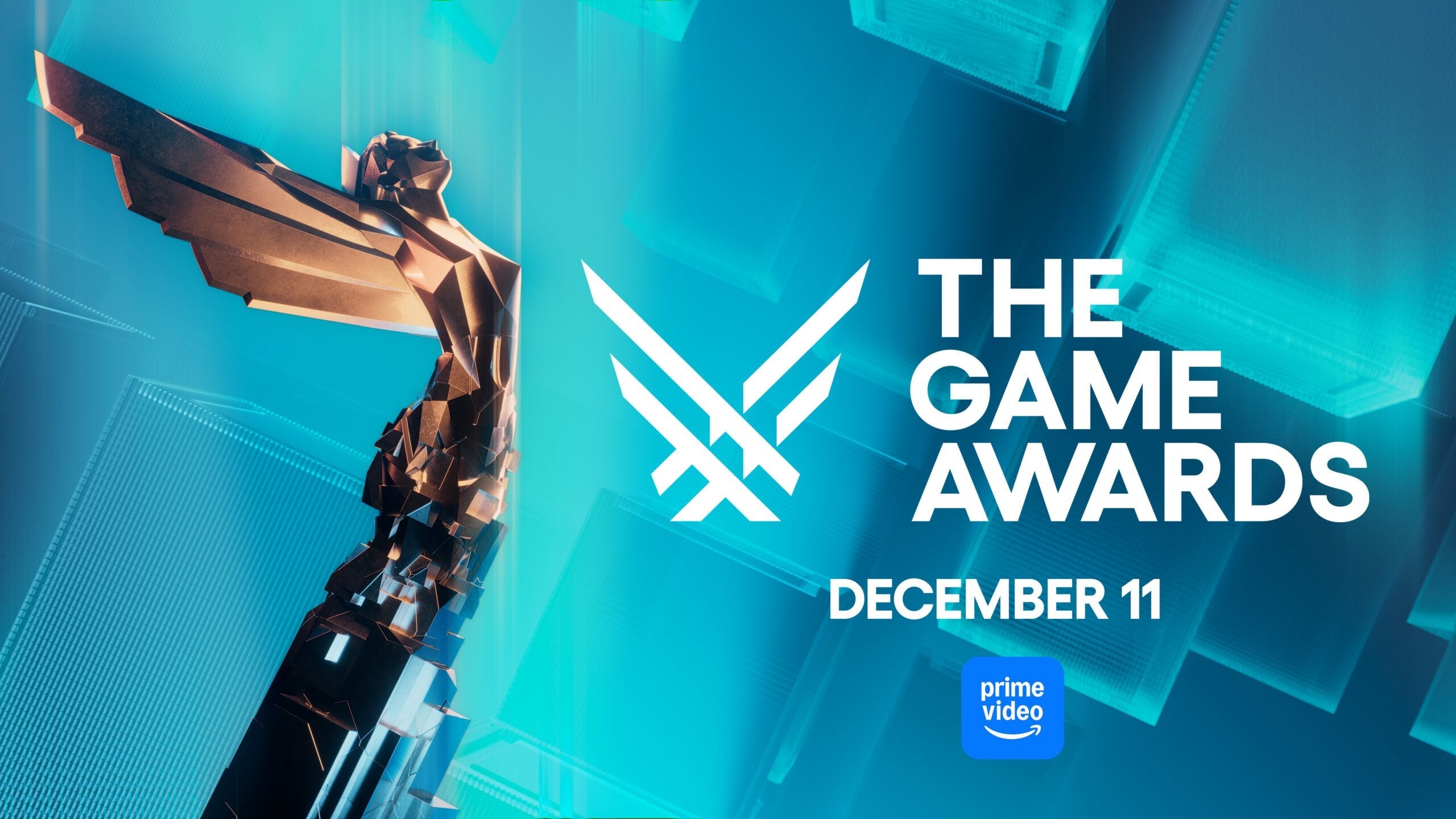
Game Of The Year 2025 Nominees
20 Nov, 2025
The nominees for the most prestigious award in gaming are in, and the 2025 lineup signals a dramatic power shift. This year's Game of the Year category is not just a list of contenders; it's a statement. With five of the six nominations coming from indie or indie-adjacent studios, the industry's center of gravity has officially moved. The Nominees Are: Clair Obscur: Expedition 33 Death Stranding 2: On the Beach Donkey Kong Bonanza Hades II Hollow Knight: Silksong Kingdom Come: Deliverance II Let's break down what this surprising list tells us about the state of gaming. The Indie Domination: Creativity Over Budget The presence of Hades II, Hollow Knight: Silksong, and Clair Obscur: Expedition 33 was expected, but their collective dominance of the category is historic. It underscores a fundamental change: creative risk-taking and artistic vision are now celebrated above sheer budgetary might. This year's list feels less like a battle of marketing budgets and more like a curated gallery of the most innovative and passionately crafted experiences. It proves that players and critics alike are hungry for fresh ideas, even if they don't come from traditional AAA powerhouses. The Shocking Omissions: Where Was Ghost of Yotei? The biggest talking point from this reveal isn't who made the list, but who didn't. The absence of critically acclaimed titles like Ghost of Yotei and Split Fiction has left many fans stunned. This raises critical questions: Did these games, despite their quality, lack the defining cultural impact of the nominees? Were they overshadowed by titles with more groundbreaking or innovative core mechanics? Did the voting panel simply have a stronger preference for unique artistic styles and experimental gameplay? Their omission confirms that a high Metacritic score and a strong fanbase are no longer a guaranteed ticket to the GOTY stage. The goalposts have moved. The AAA Outlier: Why Kingdom Come: Deliverance II Belongs Amid the indie wave, Kingdom Come: Deliverance II stands out as a powerful exception. Its nomination is profoundly significant. The first game was a beloved cult classic praised for its uncompromising historical realism but often seen as niche. The sequel has shattered that ceiling, delivering a massive leap in production quality, narrative depth, and the complexity of its systems-driven world. Its nomination is a victory for authenticity and deep simulation design, proving that hardcore, immersive experiences can compete for the industry's highest honour and potentially elevate the entire RPG sub genre. The Front-Runner? Why Clair Obscur: Expedition 33 Could Win While any nominee could take the crown, Clair Obscur: Expedition 33 has emerged as a potential front-runner for three key reasons: Innovative Gameplay: It masterfully blends turn-based strategy with real-time execution in a way that feels both fresh and deeply engaging. Bold Art Direction: Its visual style is among the most distinct and memorable of the year, creating a powerful and cohesive identity. Cultural Moment: The game didn't just release; it captured the community's imagination, sparking discussion and excitement across social media and beyond. This potent combination of innovation, art, and buzz makes it a serious threat to even the most established franchises. How to Vote and Watch Your voice matters! You can cast your vote for Game of the Year and all other categories at the official website: thegameawards.com The winners will be announced live during The Game Awards ceremony on December 11, 2025. Final Thoughts: An Unpredictable Race Whether you're rooting for the indie revolution embodied by Hades II, the auteur vision of Death Stranding 2, or the hardcore realism of Kingdom Come: Deliverance II, one thing is clear: the 2025 Game of the Year race is the most unpredictable and exciting in years. The industry is changing, and the GOTY list is its loudest echo.
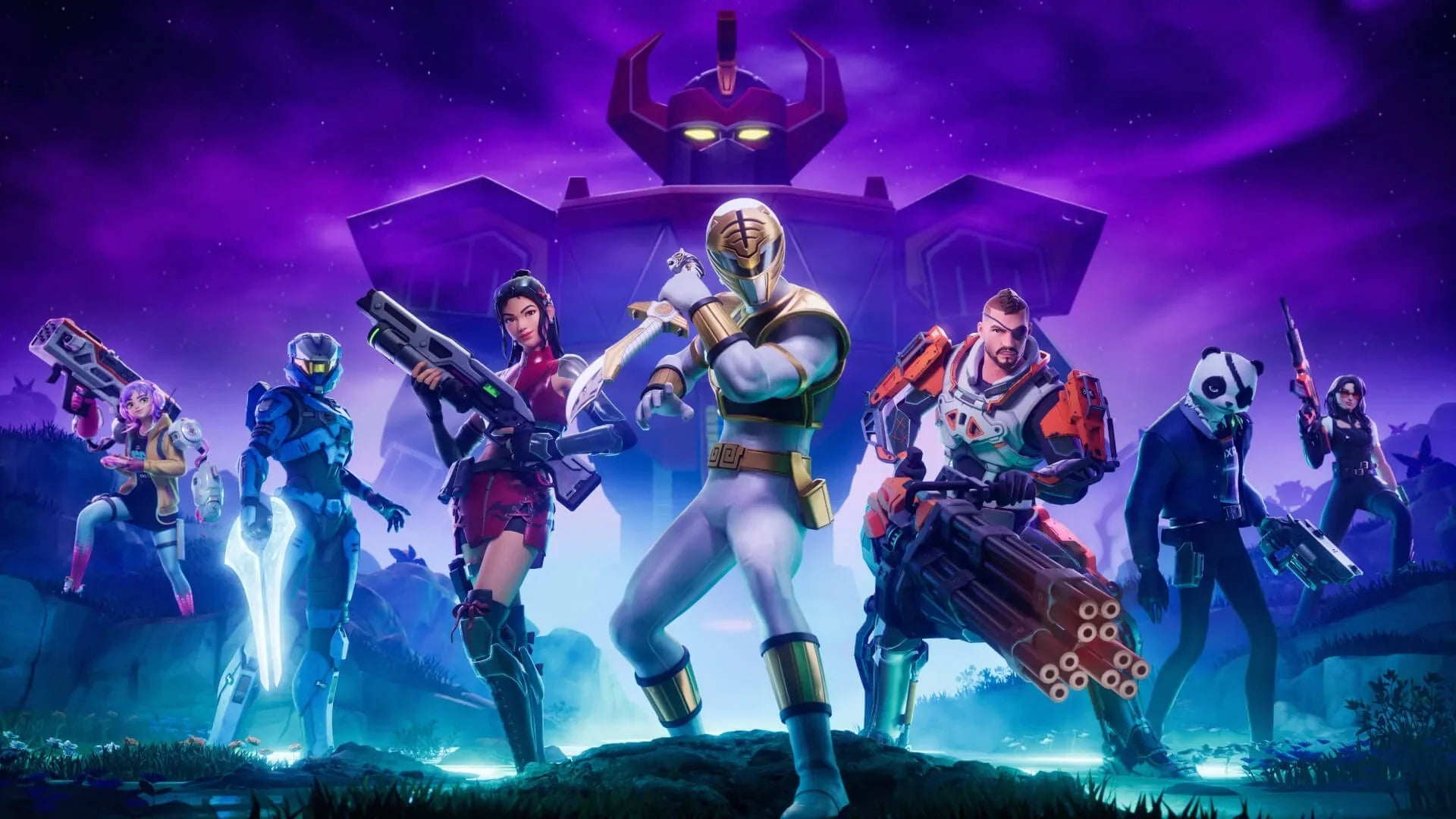
The Evolution of Battle Royale Games
31 Oct, 2025
The "Winner Winner Chicken Dinner" catchphrase is now etched into gaming legend, but the battle royale genre didn't just appear overnight. Its journey is a fascinating tale of literary inspiration, grassroots modding, and explosive mainstream success. This is the story of how a brutal survival concept evolved from deadly classrooms to the chaotic, last-player-standing lobbies we know today. Part 1: The Origin - A Chilling Literary Inspiration Long before the first circle closed in a video game, the core concept was born in literature. In 1999, Japanese author Koushun Takami released the novel Battle Royale, a chilling story where a class of students is forced to fight to the death on a remote island. The concept was popularized further by the controversial 2000 film adaptation and later echoed in Western culture with The Hunger Games. This narrative of forced survival where only one victor can emerge from a large group planted the seed. It provided the foundational, high-stakes drama that would later become the entire premise of a gaming genre. Part 2: The Modding Era - Where Gamers Built the Genre The first playable iterations of battle royale weren't standalone games; they were passionate fan-made mods. The genre was built from the ground up by players and creators. Minecraft Hunger Games: One of the earliest examples was the "Hunger Games" mod in Minecraft, where players scavenged for resources and fought until only one remained. It captured the core survival loop in a simple, accessible format. The PlayerUnknown Mods: The true architect of the modern battle royale, Brendan "PlayerUnknown" Greene, created a custom mod for Arma 2 in 2013. This mod introduced the key ingredients we recognize today: a large map, a shrinking play zone, and loot-based progression. Its success led to a more polished version for Arma 3, proving the formula had serious potential. Part 3: The First Standalone Games The genre's first major step into the mainstream was H1Z1 (later rebranded Z1 Battle Royale). Launched in 2015, it was one of the first standalone games to feature a dedicated battle royale mode. While clunky, it demonstrated that the concept could work as a full-fledged product, combining fast-paced combat and survival tension for a mass audience. Part 4: The Golden Age - PUBG and Fortnite Redefine Gaming 2017 was the watershed moment that changed the gaming landscape forever. PlayerUnknown’s Battlegrounds (PUBG): Building directly on his modding experience, Greene released PUBG. It nailed the formula with a focus on realistic gunplay, high tension, and the now-iconic airdrop mechanic. Its unprecedented success catapulted battle royale from a niche interest to a global gaming phenomenon. Fortnite Battle Royale: Just months after PUBG's rise, Epic Games launched Fortnite Battle Royale. Its free-to-play model, vibrant art style, and groundbreaking building mechanic made it an instant hit. Fortnite didn't just compete; it exploded into a cultural juggernaut, reshaping live-service gaming and becoming a social platform for millions. Part 5: The Genre Floods the Market The success of PUBG and Fortnite triggered a gold rush. Every major publisher wanted a piece of the action, leading to a wave of high-quality competitors, each with a unique twist: Apex Legends (2019): Introduced hero-based characters ("Legends") with unique abilities, a revolutionary ping communication system, and faster, more fluid movement. Call of Duty: Warzone (2020): Leaned into COD's signature feel with a realistic, large-scale map, a deep loadout system, and the Gulag mechanic, giving players a second chance at life. Garena Free Fire: Optimized the experience for the massive mobile market, proving the genre's appeal was truly universal. Part 6: Innovation and Expansion - Beyond the Shooter The core "last-one-standing" formula proved to be incredibly versatile. Developers began applying it to other genres, moving beyond traditional shooters. Games like Fall Guys transformed the concept into a chaotic, lighthearted obstacle course race. This experimentation showed that the battle royale template could be a foundation for creativity, leading to new hybrids involving strategy, crafting, and social deduction. Conclusion: A Genre That's Still Evolving The evolution of battle royale is a testament to the power of community-driven innovation. It journeyed from the pages of a dystopian novel, through the passion of modders, and into a multi-billion dollar pillar of the industry. Today, battle royale is more than a game mode; it's a dynamic live-service platform for events, storytelling, and cross-media collaborations. As developers continue to push boundaries with new mechanics and ideas, one thing is clear: the battle royale genre is far from reaching its final circle. What was your favorite era in the battle royale evolution? Do you prefer the hardcore realism of the early days or the creative mayhem of modern titles?
Battlefield VI Open Beta — What You Need to Know
11 Aug, 2025
EA’s Battlefield VI open beta is live and it’s the biggest Battlefield beta yet. Whether you missed the event or want a single place for dates, maps, system requirements, and practical tips, this guide has you covered. Open Beta dates & platforms The official Battlefield VI Open Beta runs across two weekends (early access/preload windows were announced ahead of the events). The beta is available on PC (Steam & EA app / Epic), PlayStation, and Xbox Series X|S. How to access the Open Beta Pre-load the client from the EA page or your console store before the open weekend. Make sure your EA Account is linked to your console/Steam account to keep progression and rewards synced. EA’s help pages explain account linking and access steps. Maps & Modes included in the beta The beta includes multiple maps across the two weekends. Weekend one maps featured Siege of Cairo, Liberation Peak and Iberian Offensive. Weekend two adds Empire State, with extra modes like Rush, Squad Deathmatch and classic Conquest variants available during the second weekend. This mix gives players an early look at how scale and pacing vary per map. PC system requirements (minimum & recommended) If you’re planning to play on PC, here are the baseline specs EA listed for the beta (example minimum): Minimum: Intel Core i5-8400 / AMD Ryzen 5 2600, 16GB RAM, Nvidia RTX 2060 or AMD RX 5600 XT, ~75GB storage, Windows 10, DirectX 12. Recommended: (higher CPU/GPU and SSD are recommended for stable 60+ FPS at higher settings). Check EA Help pages before you install for the most up-to-date specs. What players are saying — early impressions Massive interest. Player numbers and viewership exploded during the beta weekend, with peak concurrent players and massive Twitch viewership — an encouraging signal for the franchise’s comeback. Gameplay pace debates. Some players praise the return to large-scale Battlefield battles, while others note the beta’s faster time-to-kill (TTK) and movement tweaks that make the experience feel closer to modern, faster shooters. Expect dev changes after beta feedback. Technical issues in spots. Server queues and some launch-side bugs are common in big betas — report issues through EA channels and check patch notes for updates. Beta rewards & progression EA typically offers in-beta challenges and cosmetics that carry to launch or unlock early content. Play the beta to stack up challenges and claim any limited-time rewards. See the official Open Beta page for details. Quick tips to get the most from the beta Preload early — don’t wait for the first hour of a weekend to download. Link your EA account so your progress and any rewards sync correctly. Try both playlists — the beta sometimes tests locked-weapon (class-based) and open-weapon playlists; try both to see what fits your playstyle. Record footage if you’re a content creator — but be aware anti-cheat/overlay interactions can complicate recording in some setups. Share constructive feedback — devs are watching forums, surveys and community threads for balance and bug fixes. Final verdict (beta takeaways) The Battlefield VI Open Beta gives a broad, playable snapshot of the game’s core systems: large-scale combat, map design, and weapon balance. It’s also the devs’ opportunity to gather feedback and tune things before launch so your play and feedback matter. If you’re on the fence, try the beta weekends to judge the game yourself and collect any limited rewards.
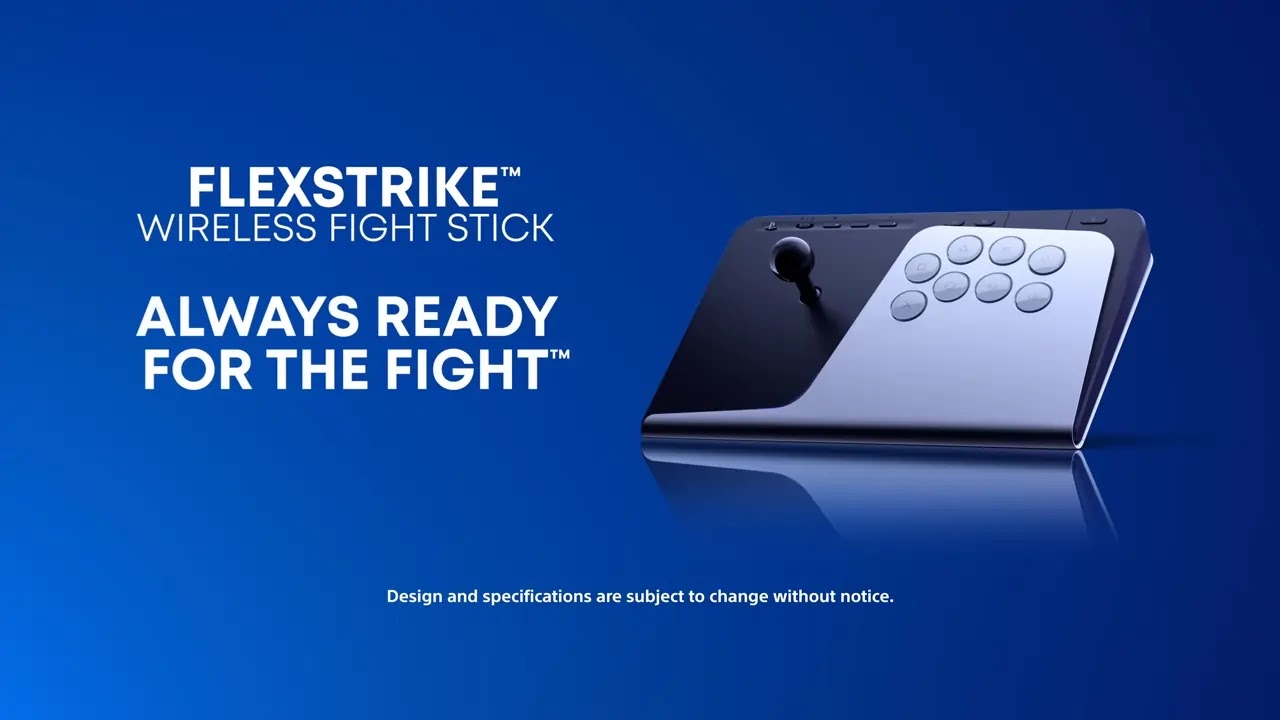
PlayStation FlexStrike Wireless Fight Stick: The Future of Competitive Fighting Games
08 Aug, 2025
The fighting game scene is about to get a serious upgrade. PlayStation has pulled back the curtain on the FlexStrike Wireless Fight Stick, its first-ever wireless arcade controller built specifically for PS5 and PC. Designed in collaboration with competitive players, this sleek piece of hardware is packed with pro-level features, portability, and customization making it just as comfortable in your home setup as it is on the tournament stage. Expected to launch in 2026, FlexStrike has already captured the attention of both casual fans and esports veterans. Performance Without Compromise At the heart of FlexStrike’s design is a focus on precision, speed, and reliability. Players can connect via PlayStation Link™ wireless for lag-free, untethered matches or opt for a USB-C wired setup for rock-solid stability in high-pressure moments. Whichever you choose, you can expect lightning-fast response times that keep your combos sharp and your execution clean. Customizable to Your Play Style FlexStrike is built to adapt to you not the other way around. It uses mechanical switch buttons for consistent, tactile feedback and comes with three tool-free swappable restrictor gates square, circle, and octagon so you can tailor your joystick feel to suit each fighting game. All of these gates, plus the included PS Link USB adapter, tuck neatly into the controller’s built-in storage, making it easy to switch setups between matches without digging through a bag of loose parts. Travel-Ready Design Portability is a major part of the FlexStrike experience. Each unit ships with a sling carry case designed to protect your stick on the go, complete with a lever gap that shields your joystick during transport. The case also has compartments for gates, cables, and accessories, so everything stays organized. And with its rechargeable built-in battery, you’re free to set up and play anywhere no outlet required. Made for the PlayStation Ecosystem FlexStrike isn’t just compatible with PS5 it’s integrated into the PlayStation ecosystem. Thanks to PlayStation Link, you can pair it with Pulse Elite or Pulse Explore headsets for crystal-clear, low-latency audio and voice chat. Even better, two FlexStrike controllers can connect to a single PS Link adapter for smooth couch battles. The stick also works alongside a DualSense controller, letting you access PS5-specific inputs like the touchpad without unplugging anything. Comfort That Lasts Through Long Sets Marathon practice sessions and all-day tournaments demand comfort, and FlexStrike delivers. Its angled ergonomic design helps reduce wrist strain, while the non-slip textured base keeps it steady during intense matches. The custom digital joystick provides precise directional control, ensuring every input counts. Key Specs at a Glance The FlexStrike Wireless Fight Stick offers dual connectivity, letting players switch effortlessly between wired and wireless play. It features swappable restrictor gates for customizable joystick response, with convenient built-in storage to keep accessories safe and accessible. The portable sling carry case protects your stick on the move, while PlayStation Link integration allows low-latency audio with compatible headsets. Dual stick support enables local versus or co-op play, and the ergonomic design with a non-slip base ensures long-lasting comfort and stability. Optimized for Today’s Biggest Fighting Games This controller is battle-ready for the most competitive titles, including: Street Fighter 6 Tekken 8 Mortal Kombat 1 Guilty Gear -Strive- Dragon Ball: Sparking! Zero Granblue Fantasy Versus: Rising See It First at Evo 2025 Fans attending Evo 2025 (August 1–3 in Las Vegas) can get hands-on time with the FlexStrike at the Fight Stick Museum and Arc System Works booths. With its official release set for 2026, this is your chance to test-drive the future of fight stick technology before it hits shelves. Final Word The PlayStation FlexStrike Wireless Fight Stick is more than just a controller it’s a precision tool built for players who demand the best. With pro-grade performance, tournament-ready portability, and customization at its core, it’s poised to become a must-have for fighting game enthusiasts everywhere. Whether you’re chasing your next tournament win or leveling up at home, FlexStrike makes sure every strike counts.
The US Tariff's Effect on the Gaming Industry
25 Apr, 2025
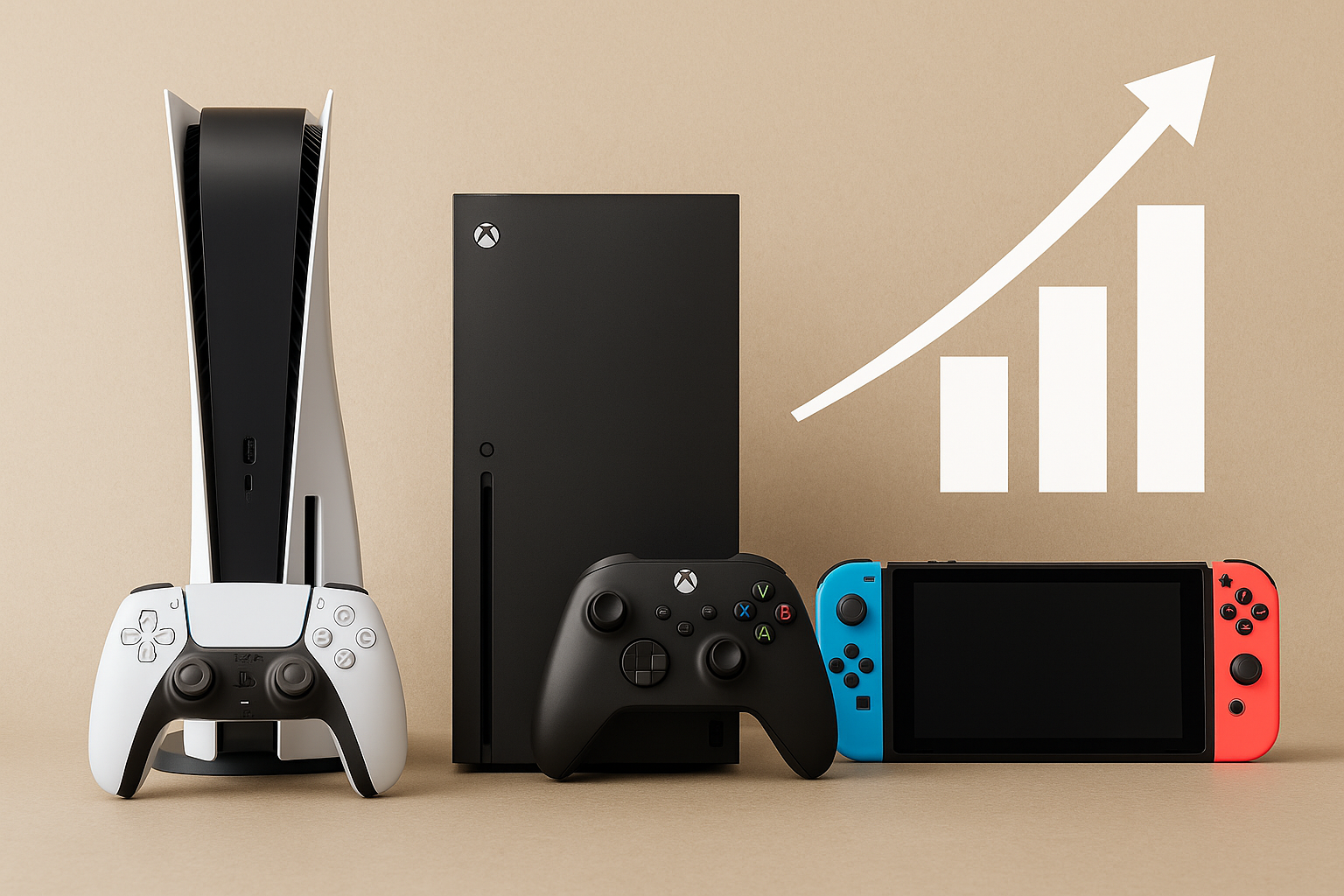
If you were planning on waiting for that sweet price drop to buy the next gen consoles or accessories, I have some terrible news for you my friend. The U.S Tariffs are here and they’re about to make our pockets hurt! So if you're thinking of getting a game console, please get one ASAP, like... now! Let me explain why. So, What’s Going On? Back in February, the US decided to impose tariffs on certain products coming from China (and various other countries) including electronics like consoles, accessories, and parts. When companies like Sony, Microsoft, and Nintendo make a console, a large portion of the parts come from China everything from the microchips inside to the plastic casing is often made overseas. The tariffs now raise the cost of importing these parts, and guess who gets to foot the bill? Yup, we do gamers! How Much Does This Really Affect Us? The question is, how much of the bill are we footing? Let’s see, experts are projecting that at base, game consoles could see a 30% hike in their price. And that's just at base… Yikes. It's not just the consoles either, the price of accessories like gaming headsets, keyboards, and mice are all going to feel the sting. Why Doesn’t the Industry Just Absorb the Cost? Well, here’s the thing: making a console isn’t cheap. Even without tariffs, companies have tight margins. So, when something like a 145% tariff is slapped on imported goods, companies either have to eat that extra cost (which eats into profits) or pass it on to consumers. *Spoiler Alert*: They almost always pass it on to us! What About Smaller Companies? Now, let’s talk about the smaller players accessory makers and indie developers. For them, tariffs can be even more of a nightmare. Many of these companies rely on affordable manufacturing overseas. If their costs go up, they either have to raise prices or sacrifice quality. And as any gamer knows, there’s only so much we’re willing to pay for a generic knockoff controller before we start searching for something that feels just right. Will It Ever Get Better? That’s the big question. There are talks about rolling back some of these tariffs, but with so many industries affected, it’s anyone’s guess when that will happen. Until then, we’ll likely continue to see higher prices on consoles, games, and accessories. Bottom Line? At the end of the day, tariffs are adding a serious cost to your gaming gear. While there’s no easy fix, one thing’s for sure your next console might cost a little more than it would’ve a few years ago… you hate to see it. How does this affect your future gaming plans?

Samsung Odyssey G7 32" Review
12 Oct, 2024
If you’re in the market for a gaming monitor that does it all, the Samsung Odyssey G7 32" should definitely be on your radar.

The Victrix Pro BFG: A Game-Changing Controller
09 Oct, 2024
Let’s talk about the Victrix Pro BFG—this controller is seriously next level, and I’m about to show you why. Unmatched Trigger CustomizationFirst off, let’s talk about the triggers. This thing comes with five stopping points, giving you anything from a full pull to a super shallow press. Whether you’re in a high-speed shooter where you need to spam shots or in a situation requiring precision, the BFG has you covered. The best part? The back-end switches make adjusting these triggers ridiculously easy, and honestly, it almost feels like cheating with how fast you can react. Remappable Paddles for Ultimate ControlIf you’re looking for extra control, the four remappable paddle buttons are a game-changer. Need to jump or crouch while still aiming without losing momentum? Just map it to one of the paddles, and you’re good to go. And if you’re gaming across platforms, this controller is incredibly versatile. A simple switch makes it compatible with PS4, PS5, and PC. Talk about value for money! Swappable Joysticks and D-PadOne of the coolest features is the ability to swap out the joysticks and D-pad. Want to switch from the PlayStation layout to an Xbox-style offset? Done. Prefer taller or shorter analog sticks for different games? You got it. And for the fighting game enthusiasts out there, the fight pad module will let you pull off combos so fast, you’ll surprise even yourself. It’s a level of customization you don’t usually see in controllers. Pro Features, Pro DesignLike most pro controllers, the Victrix Pro BFG comes with a sleek carrying case, so you can take your setup anywhere with ease. Everything about this controller screams premium—from the customization options to the ergonomic design. So, what do you think? Is the Victrix Pro BFG your next controller, or does the DualSense Edge have your heart?