![Vivid Gold - Video Game Outlet [KE]](http://vividgold.co.ke/cdn/shop/files/vivid_gold_Inverted_Color_Transparent_bg_1.svg?v=1776417429)


Recent Articles


Xbox Isn't Dead: How New Leadership Just Silenced the Critics
13 Jun 2026
Why Most PC Gamers Are Choosing 1440p Over 4K
26 May 2026Xbox Isn't Dead: How New Leadership Just Silenced the Critics
13 Jun, 2026
For the last few years, people kept saying the same thing: "Xbox is finished.""Xbox has no exclusives.""Xbox has lost the console war." But after the Xbox Games Showcase 2026, those comments suddenly got very quiet. This year's event felt different. Instead of playing defense, Xbox came out swinging and the message was clear: reports of Xbox's death have been greatly exaggerated. A Showcase That Changed the Narrative This year's Xbox Showcase wasn't just another event. It was a statement. Microsoft's gaming division stopped apologizing for its position and started showing what it's been building. Fans got new looks at: Modern Warfare 4 – The next chapter in the blockbuster franchise. Gears of War: E-Day – A return to the series' brutal, emotional roots. Persona 6 – The iconic JRPG series continues its Xbox partnership. Senua's Saga: Hellblade II – New gameplay showcasing Ninja Theory's visual mastery. Clockwork Revolution – A ambitious new IP from inXile Entertainment. Halo Campaign Evolved – A fresh take on Master Chief's next adventure. In total, over 30 upcoming games were showcased, all headed to Xbox, PC, and Game Pass. That's not a platform in retreat. That's a platform building momentum. The Biggest Surprise: True Exclusives Are Back Perhaps the most significant announcement wasn't any single game it was the strategy shift. Xbox confirmed the return of true console exclusives with titles like Gears of War: E-Day and Clockwork Revolution. After years of every Xbox game also launching on PlayStation and Nintendo, this marks a meaningful change. While Xbox remains committed to reaching players everywhere, it's also signaling that owning an Xbox will once again come with unique, can't-play-elsewhere experiences. This balance between accessibility and exclusivity has been difficult to strike. The new showcase suggests Xbox may have finally found the formula. The Leadership Factor: A Renewed Vision Many fans are crediting Xbox's renewed direction to the company's new leadership team. Under its current strategy, Xbox is no longer trying to win on a single front. Instead, it's balancing multiple pillars simultaneously: Game Pass: The subscription service remains the best value in gaming. Exclusives: Major first-party titles that can only be found on Xbox. PC Gaming: Day-one releases on Steam and the Xbox app. Cloud Gaming: Play anywhere, on any device. Console Hardware: A commitment to powerful, innovative systems. The result? Xbox suddenly feels ambitious again. The sense of direction that felt muddled for years has been replaced by clarity and confidence. Celebrating 25 Years: The Anniversary Surprise The showcase also celebrated Xbox's 25th anniversary in style. Microsoft revealed the limited-edition Xbox Series X25—a stunning console and matching controller inspired by the original Xbox's iconic translucent green design. But the coolest surprise wasn't the hardware itself. It was who got one. The Xbox CEO announced that every attendee wearing a "fan" badge at the showcase would receive the limited-edition anniversary console for free—as a thank-you for being part of the celebration. It was a gesture that transformed spectators into participants and demonstrated genuine appreciation for the community. What This Means for the Future The narrative around Xbox has shifted. For years, the conversation was dominated by sales figures, exclusivity debates, and comparisons to PlayStation. After this showcase, the conversation is finally about the games again. Before Showcase After Showcase "Xbox has no exclusives" Gears of War: E-Day, Clockwork Revolution, and more "Xbox is losing" A clear, ambitious strategy across multiple fronts "The brand has no direction" Renewed leadership with a balanced vision "No reason to buy an Xbox" Unique experiences you can't get elsewhere The Real Story: Xbox Refused to Quit So maybe the real story isn't whether Xbox is winning or losing the console war. Maybe the real story is that Xbox refused to quit. After years of being counted out, written off, and declared irrelevant, Microsoft's gaming division is still here. And after this showcase, it looks like they're finally giving gamers a reason to believe again. The console wars will continue. The debates will rage on. But one thing is now clear: Xbox isn't finished. It's just getting started. What did you think of the Xbox Games Showcase 2026? Are the new exclusives enough to bring you back to the platform? Let us know
Why Most PC Gamers Are Choosing 1440p Over 4K
26 May, 2026
4K gaming looks incredible. The sharpness, the detail, the sheer visual clarity on paper, it's the ultimate way to play. But here's the reality: most PC gamers are still choosing 1440p instead. And honestly, that choice makes perfect sense. While 4K might be the dream, 1440p is what most PC gamers actually want to live with every day. Let's break down why. The Performance Trade-Off: Visuals vs. Frame Rates While 4K delivers undeniably sharper visuals, it comes with a massive performance cost. Driving four times as many pixels as 1080p (and significantly more than 1440p) demands serious GPU power. Resolution Total Pixels Relative GPU Demand 1080p ~2 million Baseline 1440p ~3.7 million ~1.8x 1080p 4K ~8.3 million ~4.5x 1080p The result of that demand: Lower frame rates: Even high-end GPUs struggle to maintain 120+ FPS at 4K in demanding titles. Higher temperatures: More pixels pushed = more heat generated. More expensive hardware: You're paying a premium just to keep the game playable. The Sweet Spot: Why 1440p Hits Perfectly 1440p sits right in the middle between visual quality and performance and for most gamers, that's the ideal balance. What 1440p delivers: Sharp, detailed visuals: Games still look fantastic, with clear textures and minimal aliasing. High frame rates: You can comfortably push 120fps, 144fps, or even 240fps without needing a flagship GPU. Lower system requirements: A mid-range graphics card can handle 1440p gaming beautifully. It's the resolution where "good enough" meets "actually achievable" for most budgets. The Cost Problem: 4K Hardware Is Getting Insane To fully enjoy consistent 4K gaming especially at high refresh rates you generally need top-tier hardware: RTX 4080 or 4090: Current generation flagships capable of 4K/120fps in many titles. Future GPUs: Even newer cards will be expensive at launch. Complete System Cost: A 4K-ready PC can easily exceed $2,500–$3,000. Compare that to 1440p: Mid-range GPUs like RTX 4070, RX 7800 XT: More than capable of excellent 1440p performance. Budget-friendly builds: You can build a solid 1440p rig for half the cost of a 4K machine. The price gap is real, and it's growing. As GPU prices continue to climb, 1440p becomes an increasingly sensible choice. Competitive Gaming: Frame Rate Over Pixels For competitive gamers those playing Valorant, Counter-Strike, Apex Legends, Call of Duty, or Overwatch smoother gameplay matters far more than extra pixels. Higher frame rates provide: Better responsiveness: Your inputs register faster. Reduced input delay: Every millisecond counts in competitive play. Smoother motion tracking: Easier to follow fast-moving targets. A genuine competitive advantage: Higher refresh rates (144Hz, 240Hz, 360Hz) are standard in esports. At 1440p, you can push those high frame rates consistently. At 4K, even the best GPUs struggle to maintain competitive-level refresh rates in demanding titles. The Reality Check: What Most Gamers Actually Use Steam's hardware survey consistently shows that the majority of PC gamers are not on 4K. The most popular resolutions remain 1080p and 1440p. Resolution Typical User 1080p Budget builds, esports-focused players, older monitors 1440p The enthusiast sweet spot, high refresh rate gaming 4K High-budget builds, content creators, single-player immersion 4K has its place especially for cinematic single-player experiences on large, high-quality displays. But for everyday gaming? Most players are voting with their wallets, and they're choosing 1440p. The Verdict: 4K Is the Dream, 1440p Is the Reality Here's the honest breakdown: If You Want... Choose... Maximum visual fidelity for single-player games 4K (if budget allows) High frame rates for competitive play 1440p The best balance of visuals and performance 1440p To save money on GPU and monitor costs 1440p To future-proof for several years 1440p (easier to drive for longer) 4K gaming looks amazing, but it demands flagship hardware, sacrifices frame rates, and costs significantly more. For most PC gamers including enthusiasts who care about both visuals and responsiveness 1440p is simply the smarter choice. What's Your Resolution? Are you team 1440p or team 4K? What resolution do you actually game on, and why? Let us know in the comments!

Games That Deserved GOTY… But Got Robbed
17 Mar, 2026
Every year, The Game Awards and other industry ceremonies spark the same debate: Did the right game actually win? Most GOTY winners are undeniably incredible. But sometimes, another title pushes the industry forward, defines a generation, or delivers a once-in-a-lifetime experience—and still walks away empty-handed. These are the games that, in the hearts of millions of players, deserved the crown but were robbed of their moment. 1. Red Dead Redemption 2 (2018) – Lost to God of War Why It Deserved GOTY: Unmatched world immersion and emotional storytelling. Red Dead Redemption 2 wasn't just a game; it was an experience. Rockstar created a living, breathing world where every town, NPC, and random encounter felt organic. Arthur Morgan's journey remains one of the most emotionally powerful stories in gaming—a blockbuster willing to slow down and let its characters breathe. Why It Lost: God of War (2018) was a masterful reinvention of its own franchise, blending cinematic storytelling with tight combat. It was a deserving winner—but many argue that RDR2'ssheer scale and immersion made it the more groundbreaking achievement. The Legacy: Years later, Arthur Morgan's story is still discussed, analyzed, and cherished. Its world remains a benchmark for open-world design. 2. Ghost of Tsushima (2020) – Lost to The Last of Us Part II Why It Deserved GOTY: A breathtaking world that proved open worlds could feel natural, not cluttered. Ghost of Tsushima captured the feeling of becoming a samurai better than almost any game captures its fantasy. Its guiding wind replaced cluttered map markers. Its cinematic sword duels were pure Kurosawa. It was a love letter to both Japan and the art of filmmaking. Why It Lost: The Last of Us Part II was a polarizing but technically brilliant narrative powerhouse. Its ambition and execution were undeniable, but Ghost's pure, uncynical beauty and elegant design left many feeling it was the more universally enjoyable experience. The Legacy: Ghost of Tsushima proved that open-world games could prioritize artistry over checklists. Its Director's Cut and upcoming sequel show its lasting impact. 3. Doom Eternal (2020) – Didn't Win Why It Deserved GOTY: It perfected first-person shooter combat. Doom Eternal took the 2016 reboot and cranked everything to eleven. Every fight became a violent puzzle juggling weapons, managing resources, mastering movement, and maintaining aggression at lightning speed. It demanded skill, strategy, and rhythm like no other shooter before or since. Why It Lost: 2020 was a stacked year. The Last of Us Part II and Ghost of Tsushima dominated the conversation, leaving little room for a pure, unapologetic shooter to break through. The Legacy: Doom Eternal is now studied as a masterclass in combat design. Its influence can be seen in every fast-paced shooter that followed. 4. The Legend of Zelda: Tears of the Kingdom (2023) – Lost to Baldur's Gate 3 Why It Deserved GOTY: Near-total creative freedom that let players solve problems in ways developers never imagined. Tears of the Kingdom didn't just expand Breath of the Wild—it completely reinvented player interaction. The Ultrahand system let players build insane machines, weapons, and contraptions, turning the world into a playground of limitless possibility. It was freedom redefined. Why It Lost: Baldur's Gate 3 was a generational RPG achievement, offering unprecedented player choice, deep systems, and massive reactivity. It was a worthy winner, but the debate between these two titans remains fierce. The Legacy: Tears of the Kingdom proved that a sequel could feel genuinely revolutionary. Its physics and systems will influence game design for years. 5. Horizon Zero Dawn (2017) – Lost to Breath of the Wild Why It Deserved GOTY: Phenomenal world-building and a unique, believable universe. Horizon Zero Dawn introduced players to a world where tribal humanity fights robotic dinosaurs. The mystery of how that world came to be—the "Zero Dawn" project—was slowly, masterfully unraveled through exploration. It was a fresh IP that felt fully formed and utterly unique. Why It Lost: It had the misfortune of releasing in the same year as Breath of the Wild, a game that fundamentally rewrote the rules of open-world design. There was no beating that wave. The Legacy: Aloy became a PlayStation icon. The Horizon series is now a flagship franchise, proving that great worlds find their audience regardless of awards. 6. Marvel's Spider-Man (2018) – Didn't Win Why It Deserved GOTY: It made you feel like Spider-Man. Insomniac solved a problem that had plagued superhero games for decades: traversal. The web-swinging system alone was so fluid, so fun, that simply moving around New York was a joy. Combined with a heartfelt story and tight combat, it was superhero gaming at its peak. Why It Lost: 2018 was God of War and Red Dead Redemption 2's year. Spider-Man, despite its excellence, was squeezed out by two of the most acclaimed games of the generation. The Legacy: Spider-Man set the new standard for superhero games. Its sequels and spin-offs prove that Insomniac built something special. The Real Truth About GOTY Here's the thing about Game of the Year awards: they're just opinions. A trophy doesn't define a game's legacy. Years later, players are still talking about these titles, replaying them, recommending them to friends, and modding them. That cultural staying power—the fact that we're still debating these games years after they lost—might matter more than any award. The real victory isn't the statue. It's being remembered. Which Snub Hurt You Most? So now I want to hear from you. Which game do YOU think was the biggest GOTY robbery in gaming history? Was it one of these six, or another title we missed? Let us know in the comments.

Best Direct Drive Wheels for Sim Racing: Fanatec, Moza & Logitech Compared
12 Mar, 2026
f you're serious about sim racing, you've heard the term Direct Drive. It's the gold standard the technology that separates toy-like controllers from professional-grade racing equipment. But with options from Fanatec, Moza, and now Logitech, which one is actually worth your money? Let's break down what Direct Drive means, why it matters, and which wheelbase is right for your budget and platform. What Is Direct Drive and Why Does It Matter? Before we compare specific models, let's understand the technology. Traditional racing wheels use gear or belt systems to transfer movement from a motor to the wheel. These systems introduce friction, slack, and a "mushy" feeling. Direct Drive eliminates all of that by connecting the motor directly to the wheel shaft. The Results: Stronger Force Feedback: More torque means you feel every bump, slide, and loss of traction with greater intensity. Zero Slack: Instant response with no dead zone or delay. Unrivaled Precision: You feel the exact moment the tires lose grip, giving you more control at the limit. Deeper Immersion: From the rumble of kerbs to the vibration of an F1 car at high speed, Direct Drive puts you inside the simulator. Whether you're racing GT3 cars in Assetto Corsa Competizione or open-wheel monsters in F1 25, a Direct Drive wheel transforms your experience. 1. Fanatec – The Premium Standard Fanatec has long been the name in sim racing. Their ecosystem is vast, their build quality is proven, and their wheels are used by professionals and enthusiasts worldwide. Model CSL DD QR2 GT DD Pro Torque 5 Nm (upgradable to 8 Nm with Boost Kit) 5 Nm (upgradable to 8 Nm) Platform PC, Xbox PlayStation, PC, Xbox Estimated Price (KSH) Ksh 190,000 Ksh 190,000 Who It's For: The CSL DD is the entry point into Fanatec's ecosystem, offering upgradeability and access to their extensive wheel rim library. The GT DD Pro is the go-to choice for PlayStation users who want Gran Turismo compatibility and the same solid foundation. The Fanatec Advantage: Unmatched ecosystem, proven reliability, and the ability to upgrade torque later. 2. Moza Racing – The Rising Star Moza has exploded onto the sim racing scene by offering impressive Direct Drive performance at more accessible price points. Their software is user-friendly, and their wheels pack serious features. Model Moza R3 Moza R5 Torque 3.9 Nm 5.5 Nm Platform Xbox, PC PC Estimated Price (KSH) Ksh 145,000 Ksh 160,000 Who It's For: The Moza R3 is an excellent entry point for Xbox racers who want Direct Drive quality without the Fanatec premium. The Moza R5 offers more power for PC enthusiasts who want serious feedback and excellent software tuning tools. The Moza Advantage: Great value, modern design, and intuitive software that makes setup and tuning simple. 3. Logitech G – The Budget-Friendly Entry Logitech has finally entered the Direct Drive arena with a wheel designed to make the technology accessible to a wider audience. The G RS50 is their first dedicated Direct Drive offering. Model Logitech G RS50 Torque Not specified, but entry-level DD Haptic Feedback TrueForce (up to 4,000 Hz) Platform PC (with dedicated PS/Xbox versions) Estimated Price (KSH) Ksh 144,000 Who It's For: The G RS50 is for sim racers taking their first step into Direct Drive. It's priced aggressively, features Logitech's high-fidelity TrueForce haptic feedback, and is designed to be friendly and capable out of the box. The Logitech Advantage: Affordable entry point, strong brand reliability, and excellent haptic feedback technology. The Verdict: Which Direct Drive Wheel Should You Buy? Your choice ultimately depends on your budget, platform, and ambitions. If You Want... Choose... The Ultimate Ecosystem & Upgrade Path Fanatec CSL DD / GT DD Pro (Ksh 190,000) Great Value & Modern Software Moza R5 (PC) or R3 (Xbox) (Ksh 145k - 160k) A Friendly, Affordable Entry Point Logitech G RS50 (Ksh 144,000) A Quick Note on Kenyan Pricing:These prices are estimates based on import costs, taxes, and retailer margins. Direct Drive wheels are premium imports, so expect to pay a premium. However, the jump in immersion and performance is undeniable. Final Thoughts Direct Drive isn't a luxury anymore, it's becoming the new standard. Whether you choose Fanatec's proven ecosystem, Moza's rising value, or Logitech's accessible entry point, you're getting technology that will transform how you race. The question isn't whether to go Direct Drive. It's which one fits your rig, your budget, and your racing dreams. Which Direct Drive wheel are you saving up for? Let us know in the comments!

RTX 5090: Is NVIDIA's Next GPU a Gaming Revolution or Just Marketing Hype?
24 Feb, 2026
The rumor mill is running at full speed. NVIDIA's next-generation flagship, the RTX 5090, is poised to be the most powerful consumer graphics card ever created. Gamers are dreaming of true 4K gaming at buttery-smooth frame rates, insane ray tracing, and AI features that finally feel indispensable. But as the hype machine roars, a sobering question emerges: Is the RTX 5090 about to change gaming forever, or are we all falling for the most expensive marketing play yet? Let's unpack the truth. The Promise: What the RTX 5090 Claims to Deliver NVIDIA's next-generation architecture, codenamed Blackwell, is expected to bring significant generational leaps: True 4K High Refresh Rate Gaming: The long-promised dream of running demanding titles at native 4K with max settings and ray tracing enabled at 120+ FPS could finally become a mainstream (albeit expensive) reality. Enhanced Ray Tracing & Path Tracing: More powerful RT cores should allow for more complex lighting, shadow, and reflection calculations, bringing us closer to cinematic, movie-quality visuals in real-time. AI-Powered Features: Enhanced AI cores (Tensor Cores) could power smarter upscaling technologies (think DLSS 4), more convincing frame generation, and other AI-assisted gaming and creative tools. Improved Efficiency: Blackwell is rumored to offer better performance-per-watt, meaning less heat and power draw for the same (or better) performance. On paper, this is the GPU that finally makes "4K Ultra RT" a consistent, playable experience. The Reality Check: Who Actually Needs This? The raw numbers are exciting, but context is everything. For the vast majority of gamers, the RTX 5090 may be pure overkill. The 1440p Majority: Most gamers still play at 1080p or 1440p. At these resolutions, the performance gap between a high-end 40-series card and the 5090 will be far less noticeable. Your monitor is the bottleneck long before the GPU is. The Law of Diminishing Returns: If you're upgrading from an RTX 30-series card (like a 3070 or 3080), the jump to the 5090 will be monumental. But if you already own an RTX 4090, the upgrade may only make sense for enthusiasts chasing the absolute highest frame rates at 4K or for professional creators who need the raw compute power. The Price Barrier: Flagship GPUs have crossed into luxury territory. This isn't a purchase for the average gamer; it's for the performance chaser, the high-end content creator, and the tech enthusiast who demands the absolute best, regardless of cost. The Kenyan Context: What Will the RTX 5090 Cost? This is where the hype meets harsh reality. Global pricing for the RTX 4090 started at $1,599. Given inflation, demand, and NVIDIA's pricing trends, the 5090 could easily start higher. For Kenyan gamers, the final price will include import duties, taxes, and retailer margins. A realistic estimate for the RTX 5090 at launch in Kenya could land between: Ksh 470,000 to Ksh 580,000 At this price point, it's no longer a gaming component; it's a significant investment comparable to buying a used car or a high-end motorcycle. This fundamentally shifts the value proposition. The Wildcard: Competition and the AI Gold Rush Two major factors could influence the RTX 5090's impact: Heating Competition: AMD and Intel are aggressively pushing into the high-end GPU market. If they can offer competitive rasterization performance at significantly lower prices, it could force NVIDIA to be more competitive or justify the flagship tax with truly unique features. The AI Demand: The AI boom is insatiable. Companies are buying up high-end consumer GPUs for AI training and inference, competing directly with gamers for supply. This demand is a primary reason GPU prices have remained high and could keep the RTX 5090 scarce and expensive well into 2026. The Verdict: Who Should Buy the RTX 5090? The RTX 5090 will be a marvel of engineering, a showcase of what's possible. But "possible" and "necessary" are very different things. Buy it if: You are an enthusiast with a 4K/240Hz monitor, a creative professional whose income depends on rendering speed, or someone for whom "best" is the only option. Skip it if: You are a 1440p gamer, happy with your 40-series card, or on a budget where this money could build an entire secondary PC or upgrade multiple other components. The RTX 5090 is less a mass-market product and more a halo a symbol of technological peak. For most of us, the hype is fun to follow, but the purchase is a fantasy. Are you planning to try and grab an RTX 5090, or is the price tag too steep? Let us know in the comments.

PS Plus Essential February 2026 Lineup: Four Free Games to Claim
07 Feb, 2026
PlayStation Plus Essential is kicking off February 2026 with a diverse and exciting lineup of four free games. Whether you're a fan of hard-hitting sports, deep-sea survival, psychedelic sci-fi, or high-altitude dogfights, this month has something for everyone. All games will be available to claim from Tuesday, February 3, until Monday, March 2, 2026. As always, add them to your library to keep them for as long as you have an active PS Plus subscription. Let's dive into the four titles you'll be playing this month. 1. Undisputed (PS5) Genre: Realistic Boxing Simulation The Pitch: Step into the ring with the spiritual successor to the beloved Fight Night series. Undisputed delivers a deep, technical boxing experience with over 70 officially licensed fighters. What to Expect: Precision Combat: A focus on timing, stamina management, and strategic punch selection. Career Mode: Build your fighter from a prospect to a legendary champion. Authenticity: Meticulous animation and physics that make every punch feel impactful. Perfect For: Sports game fans and anyone missing a true, high-quality boxing sim. 2. Subnautica: Below Zero (PS5, PS4) Genre: Survival Adventure / Exploration The Pitch: Return to the alien planet 4546B in this standalone expansion to the acclaimed Subnautica. This time, you're exploring a frozen sector, investigating your sister's disappearance, and surviving a beautiful yet treacherous underwater world. What to Expect: Chilling Exploration: Discover vibrant biomes, mysterious alien artifacts, and terrifying creatures beneath the ice. Survival Mechanics: Manage oxygen, temperature, hunger, and thirst while crafting tools and habitats. Engaging Story: Unravel a personal and planetary mystery through environmental storytelling and logs. Perfect For: Explorers, survival game enthusiasts, and fans of the original Subnautica. 3. Ultros (PS5) Genre: Psychedelic Metroidvania The Pitch: A visually stunning, mind-bending adventure set within a cosmic "Sarcophagus" holding an ancient, demonic being. Ultros features a unique "loop" system where death is part of the progression. What to Expect: Striking Art Style: A wildly colorful and surreal visual design that’s unlike anything else. Combat & Gardening: Blend tight melee combat with a gardening mechanic that permanently alters the environment and unlocks new paths. Narrative Loops: Each cycle reveals more of the story and allows you to reshape the world. Perfect For: Players who love inventive Metroidvanias, trippy aesthetics, and games with unique mechanics. 4. Ace Combat 7: Skies Unknown (PS4) Genre: Arcade Flight Action The Pitch: Take to the skies in one of the most celebrated arcade flight series of all time. Engage in spectacular dogfights, execute daring bombing runs, and experience a dramatic, blockbuster campaign. What to Expect: Thrilling Gameplay: Accessible yet deep controls that make you feel like an elite fighter pilot. Breathtaking Scale: Massive aerial battles with stunning weather effects and huge set-pieces. Extensive Content: A lengthy single-player campaign and a variety of iconic real-world and fictional aircraft to master. Perfect For: Action fans, aviation enthusiasts, and anyone who enjoys fast-paced, score-attack style gameplay. How to Claim & A Quick Tip for Gamers Claiming Games: Simply log into your PlayStation account on your console or the web store between February 3 and March 2. Navigate to the PlayStation Plus section, find the monthly games, and add each one to your library. Topping Up in Kenya: Need to renew your subscription or grab a gift card? For Kenyan gamers, the easiest way is through our trusted partner, VividGold Africa. Visit vividgold.africa Select your desired PlayStation Gift Card or direct subscription. Check out securely using M-Pesa. Receive your digital code instantly via email. It's the fastest, most reliable method to ensure you never miss a month of free games. February Verdict: A Month of Quality & Diversity This is a strong month for PS Plus Essential. It successfully caters to four very different audiences with high-quality titles: The sports simulator (Undisputed) The atmospheric survival adventure (Subnautica) The artistic indie Metroidvania (Ultros) The blockbuster arcade action (Ace Combat 7) There’s genuine depth and replayability in each offering, making February 2026 an excellent time to be a subscriber. Which game from the February 2026 lineup are you most excited to play?

The Best Gaming TVs of 2026: LG, Sony, Samsung & TCL Ranked
06 Feb, 2026
Your console is only as good as the screen it’s connected to. With the power of the PS5 Pro and games like GTA 6 demanding flawless 60 FPS+ performance, your TV needs to keep up. After discussing what not to buy, let's focus on the champions. For 2026, four brands stand above the rest for serious console gaming, each with a distinct philosophy. Here’s our breakdown of the top four TVs you should buy, ranked. 4: LG – The OLED Legacy King (With Realistic Caveats) The Gaming Pedigree: LG remains the reference standard for responsive, feature-rich gaming displays. Their OLEDs come fully loaded with HDMI 2.1, VRR (FreeSync & G-Sync), and near-instantaneous input lag. The 2026 Reality: However, the landscape has shifted. LG's traditional W-OLED panels can struggle with peak HDR brightness compared to newer technologies, which can make specular highlights in bright scenes (like a sunny Forza Horizon race) slightly less dazzling. Their focus has rightly moved away from the fading 8K hype to perfecting 4K. Perfect For: Gamers who play in controlled lighting, prioritize infinite contrast and perfect blacks for horror/space games, and want the most robust set of gaming features straight out of the box. The LG C/G4 series are still elite, but they’re no longer the unchallenged kings. 2 (Tie): Sony & Samsung – The Ecosystem Titans A tie, because the choice here isn't about raw specs—both deliver low input lag, 4K/120Hz, HDMI 2.1, and excellent motion handling—it's about which ecosystem serves your gaming life better. Sony: The Upscaling Artisan The Edge: Sony's Cognitive Processor XR is the best in the business at real-time upscaling and motion processing. This means last-gen games, 1440p outputs, and streaming content look sharper and cleaner. Its integration with PlayStation (Auto HDR Tone Mapping, Auto Genre Picture Mode) is seamless. The Vibe: You're buying a masterclass in image fidelity. It makes everything you play look like a polished, intentful piece of art. Model to Look For: Sony Bravia XR A95L (QD-OLED) or the high-end X90L Mini-LED. Samsung: The All-in-One Gaming Hub The Edge: Samsung's Gaming Hub transforms the TV into a cloud-gaming console. Instant access to Xbox Cloud Gaming, NVIDIA GeForce NOW, Amazon Luna, and more without extra hardware. Their QD-OLED panels also boast exceptional color and brightness. The Vibe: You're buying a gateway. It’s for the player who values convenience, variety, and cutting off dependencies on physical hardware. Model to Look For: Samsung S95D (QD-OLED) or the QN90D Neo QLED. The Choice: Sony if you want the best picture quality for your console. Samsung if you want the most versatile gaming platform. 1: TCL – The 2026 Value & Performance Champion The Power Move: In 2026, TCL has executed a stunning overtake. They've packed bleeding-edge gaming tech into TVs that dramatically undercut the premium brands on price. The Game-Changing Tech: QD-Mini LED: This hybrid technology solves historic weaknesses. It uses a Quantum Dot layer for vibrant color and a precise Mini-LED backlight for deep blacks and extreme brightness, eliminating the "halo effect" of older LED TVs and challenging OLED contrast. Dual Line Gate 240Hz: For competitive gamers, select models can use this tech to achieve a native 240Hz refresh rate (at a slightly lower resolution), offering monitor-level smoothness for titles like Call of Duty. Game Master 3.0: A dedicated gaming dashboard with visual aids like shadow enhancement and an on-screen crosshair, plus granular control over settings. The Value Proposition: The math is undeniable. You can get a massive 98-inch TCL for the price of a 65-inch model from the other brands. This sheer scale, combined with 144Hz+ performance, creates an immersive advantage "specs on paper" can't convey. Model to Look For: TCL X11H/Q10K (QD-Mini LED with Dual Line Gate). The 2026 Verdict: Choose Your Champion Buy LG for the Legacy: You want the proven, feature-complete OLED experience with perfect blacks, ideal for darker rooms. Buy Sony for the Art: You demand the absolute best picture quality, upscaling, and seamless PlayStation synergy. Buy Samsung for the Ecosystem: You live in the cloud, value all-in-one convenience, and love QD-OLED's bright, colorful punch. Buy TCL for the Future (and Your Wallet): You seek the best overall performance—exceptional contrast, high brightness, ultra-high refresh rates—and revolutionary value that lets you go bigger for less. For the performance-focused gamer in 2026, TCL represents the most compelling blend of cutting-edge technology and accessible price, making it our top overall pick. Which gaming TV philosophy aligns with your playstyle? Are you Team OLED, Team Processing, Team Hub, or Team Value?
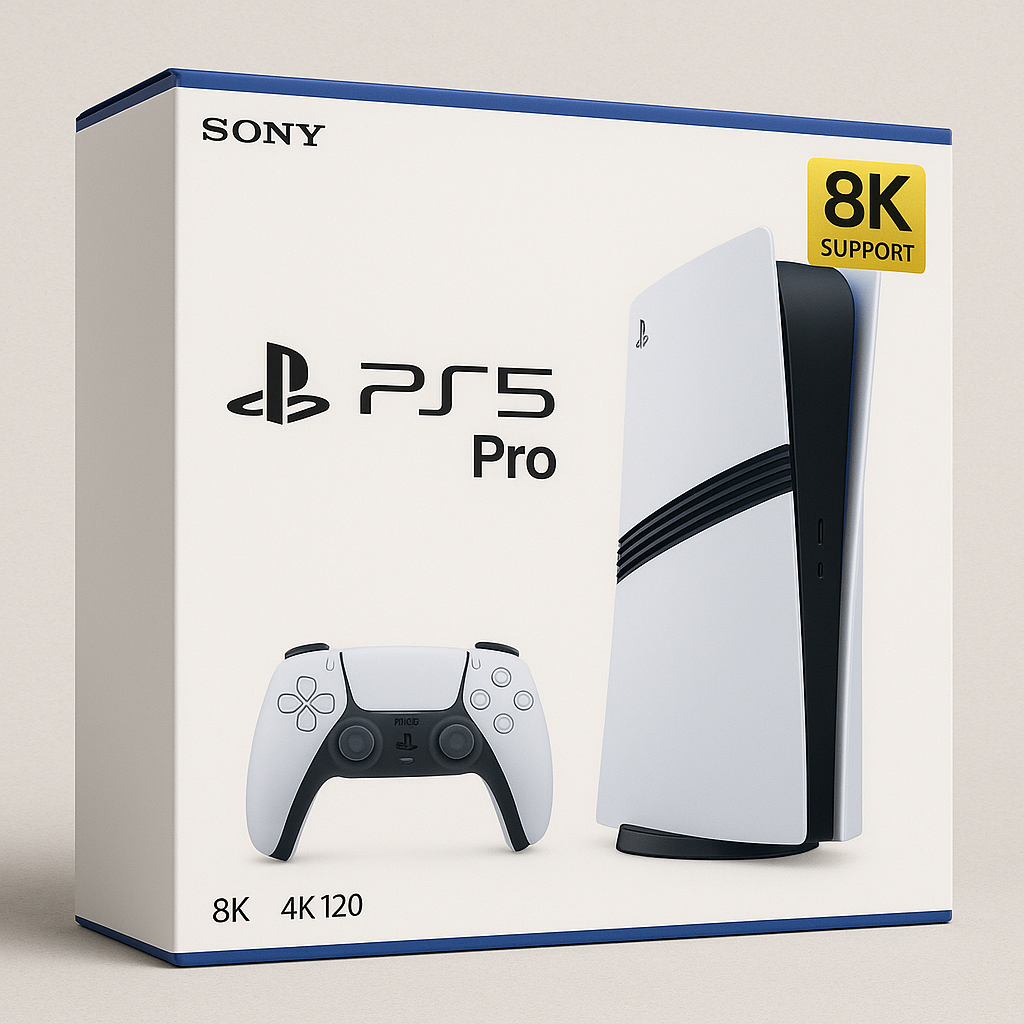
PS5 Pro and 8K: Hype vs Reality
13 May, 2025
If you’ve ever unboxed a PS5 Pro, you’ve probably seen that shiny “8K” logo stamped somewhere on the box. It’s big, it’s bold, and it sounds futuristic as hell. But here’s the thing, that 8K badge is more marketing flex than gameplay reality. Let’s unpack what “8K support” really means for the PS5 Pro, and whether you’re actually going to be gaming in Ultra-Mega-Crystal-High-Definition anytime soon. Can the PS5 Pro Do 8K? Technically? Yes.Practically? Not really! The PS5 Pro can output 8K resolution, but only if the game supports it and if you’ve got an 8K TV. That’s a very big “if,” multiplied by two. And here's the thing, almost no PS5 games are developed to run natively at 8K. Why? Because rendering a full modern game at 8K is like asking your console to sprint a marathon while juggling flaming swords. It’s just not efficient, or necessary, for most developers. Why Developers Don’t Bother with 8K (Yet) Let’s be real, game devs aren’t trying to melt your console. They’re focused on: 4K resolution at higher frame rates (60fps, 120fps) Better ray tracing Faster load times Stable performance 8K textures and assets are massive, and the performance cost isn’t worth the payoff, especially when most players don’t even own 8K displays. The math just doesn’t add up. So What’s the 8K Label Actually Mean? In reality the 8K label just means that the PS5 Pro can output an 8K signal, not that games are rendered at 8K. Think of it like this... you’ve bought a sports car that can hit 300km/h. But you’re still driving it through rush hour traffic at 80. The potential is there, but the road (or in this case, the software) isn’t ready for it. Where 8K Actually Shows Up: Photo Modes The closest you’ll get to 8K content on PS5 Pro today? Photo mode. Games like: Spider-Man 2, Horizon Forbidden West, Gran Turismo 7 and others let you snap ultra high res screenshots. These images are rendered frame by frame, not in real time, so they can hit crazy pixel counts without killing your console. It’s awesome for wallpaper lovers and virtual photographers, but it’s not actual 8K gameplay. The Future of 8K Gaming on Consoles Will we ever see real 8K gaming on consoles like the PS5 Pro? Maybe. But probably not anytime soon. Most developers aren’t designing for it, and even Sony isn’t pushing it. The latest updates and marketing around the PS5 Pro focus on: 4K fidelity mode enhancements New ray tracing features AI upscaling (like PlayStation Spectral Super Resolution) …not 8K gameplay. The focus is on smarter rendering not higher pixel counts. So, Should You Care About 8K on PS5 Pro? Honestly? Not right now. You’re better off caring about frame rate, ray tracing, load speeds, and visual stability. That’s where the PS5 Pro is really delivering. 8K is just a cherry on top for future proofing. A nice sticker to slap on the box, but not something you'll experience in most games anytime soon. Still holding out for native 8K gameplay? Or are you happy with 4K? Let’s talk in the comments and until next time, stay golden!
Nintendo Switch 2 insights and expectations
28 Apr, 2025
The Nintendo Switch 2 is here and it's packed with a few features we’ve been begging for since day one. If the OG Switch was about flexibility, this one’s about pushing boundaries. From sharper visuals to smarter Joy-Cons, here’s everything we know and what we’re hyped to see. Display Dreams: The Future Is Bright (and 4K) Lets start with the basics the display. The new display is a decent upgrade: 7.9 inches of LCD goodness at 1080p and 120fps, with full HDR support. Whether you’re racing through futuristic tracks or fighting through dungeons, everything will look smoother and brighter than ever before. And when you dock the Switch 2? You’ll get 4K support on TV, 4K! Storage, Sound, and Structure: All Leveled Up The Switch 2 also tackles those “why isn’t this better yet?” issues we’ve all had with storage. It now boasts 256GB of internal storage, which means fewer tough decisions about which games to delete. A huge step up from the measly 32GB we got on the Switch 1… that was crazy small. But as usual, larger storage *doesn’t always* mean that much more space for games since most of the time the game sizes increase with the new gens we’ll just see when it’s out. Aside from that there are also now two USB-C ports, a bump from one. New 3D audio with improved speakers. A built-in fan (no more overheating nightmares), and a way sturdier kickstand that actually works. Joy-Con 2: Now With Magnet Magic (and It’s a Mouse?!) Now let’s talk about what we use the most the JoyCon. The Joy-Con has grown up. The analog sticks and SL/SR buttons are bigger (finally), and the Joy-Cons now snap onto the console magnetically. No more wiggling them in place or hoping they click right and rest assured it does stick in firmly with the magnet. And the most unexpected feature of all the new Joy-Con can be used as a mouse. Who saw that coming?? That opens the door for a whole new type of game interaction. Expect Nintendo to roll out titles that take advantage of this, from puzzle games to point-and-click adventures. Mouse Mario? Maybe not but we’re curious. Gaming: Big Titles, Bigger Ambitions & Old Friends One of the most exciting shifts with the Switch 2 is the serious boost in third-party support. With its upgraded hardware and 4K capabilities, we’re finally seeing heavyweight titles like Elden Ring, Resident Evil 4 Remake, and Cyberpunk 2077 heading to the platform. This puts the Switch 2 in a whole new league, bridging the gap between portability and performance. Nintendo fans won't just be limited to family-friendly or first-party titles anymore AAA experiences are now on the menu. Aside from our newly added games, backwards compatibility is confirmed, meaning your existing Switch library won’t collect dust. You’ll be able to bring your games with you into this next-gen era without missing a beat. And wait... there’s more. GameCube titles are now playable on the Switch 2, and it's a dream come true for long-time Nintendo fans. Whether it's revisiting classics like Super Smash Bros. Melee or The Legend of Zelda: The Wind Waker, the Switch 2’s backwards compatibility with GameCube games will let you relive those golden days in full HD. These beloved titles are getting a fresh lease on life plus, with the inclusion of GameCube controller support, it’s like stepping back into your childhood, but better. A Chat Button Finally Enters The Chat When the leaked pictures of the Switch 2 first came out earlier in January, everyone was speculating what the “C” button could mean. Most of us thought it was a ‘cast’ button that would let us wirelessly connect to the dock and allow dual-screen gaming. We were… very off, but still pleasantly surprised by what it actually is. The all-new “C” button on the Joy-Con activates in-game voice chat. Thanks to its built-in mic and background noise filtering, you can finally trash-talk your friends mid-race without sounding like you’re underwater in a tunnel. And it gets better. You can share your screen with friends even if you’re playing completely different games. Want to flex your Smash Bros. combo while your buddy’s mining diamonds in Minecraft? Now you can. And with the Switch 2’s front-facing camera (which I'll get to in a second), you'll actually see your friends’ reactions when you steal a win at the last second. Accessories Level Up: More Ways to Play Nintendo’s not just giving the console a glow-up they’re expanding the entire ecosystem. The Switch 2 launches alongside a sleek new Pro Controller with improved ergonomics and adaptive feedback. For racing fans, there’s the Joy-Con 2 Wheel, perfect for immersive Mario Kart sessions on the big screen or tabletop mode. And with the new Switch 2 Camera, video calls and face-to-face game chat become a thing bringing a whole new layer of social interaction to your gameplay. It’s clear Nintendo wants this system to be as versatile socially as it is technically and honestly, I like it. Launching June 5: Hype Engaged Mark your calendars June 5 is when it all begins. Whether you’re a hardcore Nintendo fan or someone who’s been casually watching from the sidelines, the new changes are enticing. It’s sleek, powerful, and still just as fun. So, What Should We Expect? Expect everything better visuals, smarter social features, more ways to play, more games to play and an even stronger ecosystem. Nintendo’s not just polishing what worked; they’re evolving it. With the Switch 2, they’re proving that handheld gaming can still innovate without losing its charm. This isn’t just a sequel it’s a next-gen leap. Are you excited for the Switch 2, or are you waiting to see if it lives up to the hype?

LG UltraGear Monitor Review
13 Nov, 2024
If you’re in the market for a premium gaming monitor that combines top-tier features with practical design, the LG UltraGear 34-inch Ultrawide is a standout option worth considering. This monitor delivers a top-notch gaming experience with a 3440x1440 resolution and an 800R curve, perfect for full immersion in fast-paced games, all displayed on a vibrant OLED panel known for its sharpness and color depth.Stunning Visuals and Top Performance for GamersThe LG UltraGear doesn’t just look impressive—it performs at a level that can meet the demands of serious gamers. Its 240Hz refresh rate ensures ultra-smooth motion, minimizing any blur during rapid movements. The monitor is compatible with both AMD FreeSync and NVIDIA G-SYNC, guaranteeing tear-free gameplay whether you're using an AMD or NVIDIA graphics card. This means the visuals will stay smooth, free of stuttering or screen tearing, giving you a fully immersive experience without distractions.For console gamers or those with high-performance gaming PCs, the HDMI 2.1 support is a huge bonus. It enables compatibility with the latest devices like the PS5 Pro, ensuring you’re getting the most out of your gear. As a finishing touch, the UltraGear includes DTS Headphones:X, which brings 3D audio into the mix. This audio feature pulls you deeper into the action, making in-game sounds feel layered and lifelike, as if you’re truly inside the game.Sleek, Gamer-Friendly DesignLG has given the UltraGear a design that’s a mix of modern minimalism and gaming flair. The monitor features a smooth back panel and subtle RGB lighting that adds a touch of personality without overwhelming the design. The 800R curve is another impressive feature that sets the UltraGear apart. This aggressive curve wraps around your field of vision, allowing for a more immersive experience, although it may take a little getting used to if you’re used to flat screens.OLED Brilliance with Deep Blacks and Vivid ColorsOne of the UltraGear’s most striking qualities is the image quality provided by its OLED panel. Known for delivering nearly infinite contrast ratios, OLED technology allows for deep, true blacks and highly detailed images without the need for traditional dimming zones. This absence of blooming and backlight bleed results in a rich, high-impact viewing experience that makes each game look its best. The monitor also has a matte screen coating, which does an excellent job at minimizing reflections, making it easier to enjoy gaming in well-lit rooms without any distracting glare.A Gaming Monitor That Truly Stands OutThe LG UltraGear is a powerful, visually stunning gaming monitor that combines performance, design, and quality. Whether you’re an avid gamer or a casual player, this monitor brings an immersive, high-quality experience to every session. From its 240Hz refresh rate and 800R curve to its OLED panel with exceptional contrast, LG has crafted a display that’s hard to beat in the gaming world. Have you tried the LG UltraGear, or are you thinking about getting one? Let’s discuss your thoughts in the comments below! Until next time, stay golden.