![Vivid Gold - Video Game Outlet [KE]](http://vividgold.co.ke/cdn/shop/files/vivid_gold_Inverted_Color_Transparent_bg_1.svg?v=1776417429)


Recent Articles


Xbox Isn't Dead: How New Leadership Just Silenced the Critics
13 Jun 2026
Why Most PC Gamers Are Choosing 1440p Over 4K
26 May 2026
Top 5 Simulation Games That Define the Genre
09 Apr, 2026
Simulation games offer something unique in the gaming landscape: the chance to step into another role, master complex systems, and experience the pressure and reward of real-world professions. But not all sims are created equal. We're ranking the top five simulation games not just by hype or sales, but by depth, accuracy, and how well each captures the essence of what a simulation should be. Whether you want to pilot a jumbo jet, manage a metropolis, or run a farm, these are the gold standards. 1. Microsoft Flight Simulator – The Apex of Realism Genre: Flight Simulation Platforms: PC, Xbox Series X|S Key Feature: Entire planet recreated with real-time data Why It's #1: When people talk about the peak of simulation, Microsoft Flight Simulator is the benchmark. It doesn't just give you a map, it recreates the entire planet, from the Himalayas to your own neighborhood, using satellite data and Azure AI. The game pulls live weather data, so you're flying through actual storms. Aircraft physics model every control surface, engine, and aerodynamic force. If you want to feel the pressure of managing altitude, wind, fuel, and air traffic control like a real pilot, nothing else comes close. Perfect For: Aviation enthusiasts, realism purists, and anyone who wants to explore the world from their living room. 2. Cities: Skylines II – The Ambitious Urban Planner Genre: City-Building Simulation Platforms: PC, PS5, Xbox Series X|S Key Feature: Deep simulation of traffic, economy, and citizen behavior Why It's #2: Even with a rough launch, Cities: Skylines II remains the most ambitious city-management sim ever attempted. Every decision ripples across traffic patterns, utilities, citizen behavior, and the economy. Place a new industrial zone? You'll need to manage the resulting traffic, pollution, and housing demand. It challenges you to think like a real urban planner, not just someone placing pretty buildings. If you want complexity the kind where a small mistake cascades into city-wide gridlock this is the deep end of the pool. Perfect For: Strategy fans, detail-oriented planners, and anyone who loved the original but wanted more depth. 3. Factorio – The Logistics Puzzle Masterpiece Genre: Factory Automation / Logistics Simulation Platforms: PC, Nintendo Switch Key Feature: Ruthless precision in supply chain management Why It's #3: Factorio proves that simulation doesn't need flashy graphics to be brilliant. This game simulates logistics, production lines, power grids, and automation with ruthless precision. You're not just building factories you're engineering entire ecosystems that either work perfectly or collapse under your own mistakes. Every conveyor belt, inserter, and pipe must be optimized. Every resource must be balanced. The game famously inspires "the Factorio frown" that moment when you realize your entire production line is backed up because of one misplaced belt. Perfect For: Engineers, logistics enthusiasts, and players who love optimizing systems until they hum. 4. The Sims 4 – The Cultural Icon of Life Simulation Genre: Life Simulation Platforms: PC, PS4, PS5, Xbox One, Xbox Series X|S Key Feature: Emergent storytelling through simulated human behavior Why It's #4: Realistic? Not always. But in terms of life simulation—behaviour, needs, relationships, and emergent storytelling no game has had more cultural impact than The Sims 4. It captures the chaos of human decision-making better than anything else. Will your Sim pursue their dream career or set the kitchen on fire trying to cook eggs? Will they fall in love with the neighbor or accidentally drown in a swimming pool without a ladder? The game's systems create stories that are hilarious, tragic, and uniquely yours. Perfect For: Players who love emergent storytelling, creative expression, and watching digital lives spiral into beautiful chaos. 5. Farming Simulator 22 – True-to-Life Agriculture Genre: Farming / Agricultural Simulation Platforms: PC, PS4, PS5, Xbox One, Xbox Series X|S, Nintendo Switch Key Feature: Accurate simulation of crop cycles, machinery, and soil mechanics Why It's #5: If you want true-to-life simulation, Farming Simulator 22 is where it shines. Crop cycles, machinery physics, soil mechanics everything reflects real agricultural work. You'll need to understand seasons, fertilize correctly, manage livestock, and operate authentic equipment from brands like John Deere and Case IH. It's surprisingly meditative, watching your fields grow as you plow, plant, and harvest. But it's also brutally unforgiving if you mismanage your resources. Buy the wrong equipment or ignore your animals, and your farm will fail. Perfect For: Players who enjoy methodical, rewarding gameplay and want to understand the complexity behind food production. The Verdict: What Do You Value in a Sim? The "best" simulation game depends entirely on what you're looking for: If You Want... Choose... Pure realism & global scale Microsoft Flight Simulator Deep urban planning complexity Cities: Skylines II Logistics & systems mastery Factorio Emergent life stories The Sims 4 Authentic, meditative work Farming Simulator 22 Each of these games excels in a different direction, and that's what makes the simulation genre so rich. Whether you want to fly a 747, build a city, automate a factory, ruin a Sim's life, or run a farm, there's a masterpiece waiting for you. Which simulation game is your personal favorite? Let us know in the comments!

The Best Gaming TVs of 2026: LG, Sony, Samsung & TCL Ranked
06 Feb, 2026
Your console is only as good as the screen it’s connected to. With the power of the PS5 Pro and games like GTA 6 demanding flawless 60 FPS+ performance, your TV needs to keep up. After discussing what not to buy, let's focus on the champions. For 2026, four brands stand above the rest for serious console gaming, each with a distinct philosophy. Here’s our breakdown of the top four TVs you should buy, ranked. 4: LG – The OLED Legacy King (With Realistic Caveats) The Gaming Pedigree: LG remains the reference standard for responsive, feature-rich gaming displays. Their OLEDs come fully loaded with HDMI 2.1, VRR (FreeSync & G-Sync), and near-instantaneous input lag. The 2026 Reality: However, the landscape has shifted. LG's traditional W-OLED panels can struggle with peak HDR brightness compared to newer technologies, which can make specular highlights in bright scenes (like a sunny Forza Horizon race) slightly less dazzling. Their focus has rightly moved away from the fading 8K hype to perfecting 4K. Perfect For: Gamers who play in controlled lighting, prioritize infinite contrast and perfect blacks for horror/space games, and want the most robust set of gaming features straight out of the box. The LG C/G4 series are still elite, but they’re no longer the unchallenged kings. 2 (Tie): Sony & Samsung – The Ecosystem Titans A tie, because the choice here isn't about raw specs—both deliver low input lag, 4K/120Hz, HDMI 2.1, and excellent motion handling—it's about which ecosystem serves your gaming life better. Sony: The Upscaling Artisan The Edge: Sony's Cognitive Processor XR is the best in the business at real-time upscaling and motion processing. This means last-gen games, 1440p outputs, and streaming content look sharper and cleaner. Its integration with PlayStation (Auto HDR Tone Mapping, Auto Genre Picture Mode) is seamless. The Vibe: You're buying a masterclass in image fidelity. It makes everything you play look like a polished, intentful piece of art. Model to Look For: Sony Bravia XR A95L (QD-OLED) or the high-end X90L Mini-LED. Samsung: The All-in-One Gaming Hub The Edge: Samsung's Gaming Hub transforms the TV into a cloud-gaming console. Instant access to Xbox Cloud Gaming, NVIDIA GeForce NOW, Amazon Luna, and more without extra hardware. Their QD-OLED panels also boast exceptional color and brightness. The Vibe: You're buying a gateway. It’s for the player who values convenience, variety, and cutting off dependencies on physical hardware. Model to Look For: Samsung S95D (QD-OLED) or the QN90D Neo QLED. The Choice: Sony if you want the best picture quality for your console. Samsung if you want the most versatile gaming platform. 1: TCL – The 2026 Value & Performance Champion The Power Move: In 2026, TCL has executed a stunning overtake. They've packed bleeding-edge gaming tech into TVs that dramatically undercut the premium brands on price. The Game-Changing Tech: QD-Mini LED: This hybrid technology solves historic weaknesses. It uses a Quantum Dot layer for vibrant color and a precise Mini-LED backlight for deep blacks and extreme brightness, eliminating the "halo effect" of older LED TVs and challenging OLED contrast. Dual Line Gate 240Hz: For competitive gamers, select models can use this tech to achieve a native 240Hz refresh rate (at a slightly lower resolution), offering monitor-level smoothness for titles like Call of Duty. Game Master 3.0: A dedicated gaming dashboard with visual aids like shadow enhancement and an on-screen crosshair, plus granular control over settings. The Value Proposition: The math is undeniable. You can get a massive 98-inch TCL for the price of a 65-inch model from the other brands. This sheer scale, combined with 144Hz+ performance, creates an immersive advantage "specs on paper" can't convey. Model to Look For: TCL X11H/Q10K (QD-Mini LED with Dual Line Gate). The 2026 Verdict: Choose Your Champion Buy LG for the Legacy: You want the proven, feature-complete OLED experience with perfect blacks, ideal for darker rooms. Buy Sony for the Art: You demand the absolute best picture quality, upscaling, and seamless PlayStation synergy. Buy Samsung for the Ecosystem: You live in the cloud, value all-in-one convenience, and love QD-OLED's bright, colorful punch. Buy TCL for the Future (and Your Wallet): You seek the best overall performance—exceptional contrast, high brightness, ultra-high refresh rates—and revolutionary value that lets you go bigger for less. For the performance-focused gamer in 2026, TCL represents the most compelling blend of cutting-edge technology and accessible price, making it our top overall pick. Which gaming TV philosophy aligns with your playstyle? Are you Team OLED, Team Processing, Team Hub, or Team Value?

Gaming in Kenya? Avoid These 5 TV Models at All Costs
02 Feb, 2026
Buying a new TV for your PS5, Xbox, or PC in Kenya is exciting. With so many options at different price points, it's tempting to go for the biggest screen at the lowest cost. However, not all TVs are created equal especially for gaming. Choosing the wrong model can turn your immersive experience into a frustrating slideshow of input lag, motion blur, and unreliable performance. To save you from buyer's remorse, here are five TV types and brands you should absolutely steer clear of for serious gaming. 1. Royal TVs: The Input Lag Nightmare The Problem: Extremely high input lag and poor motion handling. Why They're Bad for Gaming: These TVs are often priced aggressively to attract budget-conscious buyers. However, their internal processing is slow, causing a significant delay between your controller input and the action on screen. In fast-paced games like Call of Duty or EA Sports FC, this makes precise timing impossible. The motion also tends to look choppy and blurry during panning shots. The Verdict: A cheap TV that will make your expensive console feel broken. The cost-saving isn't worth the ruined experience. 2. Infinix TVs: Sluggish Software, Gaming Afterthought The Problem: Unresponsive smart interfaces and lack of gaming-centric features. Why They're Bad for Gaming: While Infinix TVs might be adequate for casual streaming, their operating systems are often sluggish. This lag extends to the HDMI ports, resulting in noticeable input delay. They typically lack fundamental gaming features like a Game Mode (which reduces processing lag), Variable Refresh Rate (VRR), or Auto Low Latency Mode (ALLM). The Verdict: Built as media consumption devices, not gaming displays. You'll feel like you're fighting the TV to play your game. 3. Skyworth Smart TVs: Unreliable Performance The Problem: Inconsistent quality, buggy software, and blurry motion. Why They're Bad for Gaming: Skyworth's budget offerings are a gamble. You might deal with laggy menus, apps that crash, and significant motion blur during gameplay. They often advertise "gaming features" but implement them poorly, leading to a sub-par, unreliable experience. The lack of consistent performance updates is another major red flag. The Verdict: "Budget-friendly" often means cutting corners where it matters most for gamers: consistent, responsive performance. 4. Generic "Shell" Brands (Roch, ITEL, GLD, etc.): The Ticking Time Bombs The Big Warning: This is the most critical category to avoid. The Problem: These are not TV manufacturers. They are brands that purchase generic, off-the-shelf chassis from white-label factories in China, slap on their logo and a fancy box with misleading specs. Why They're Catastrophic for Gaming: Deceptive Marketing: They liberally use terms like "120Hz" (usually referring to motion interpolation, not native refresh rate) and "HDMI 2.1" on the box, tricking you into thinking you're getting a high-performance gaming TV. Cheap, Unreliable Components: They use the lowest-cost power boards and capacitors. Modern consoles push high data bandwidth and generate heat. These TVs are not engineered to handle this sustained load. The Result: You are very likely buying a literal ticking time bomb. A common failure is a fried capacitor when the console tries to output a high-bandwidth HDR signal, leaving you with a dead TV and no meaningful warranty support. The Verdict: The ultimate false economy. You risk losing your entire investment on a product designed to be disposable. Never buy a gaming TV from a brand that is not a recognized display manufacturer. 5. Unbranded or "Shop" TVs (Mitashi, etc.) The Problem: Zero quality control, no support, and dangerous failures. Why They're Bad for Gaming: These are the deepest end of the generic pool. Sold in local electronics shops or online marketplaces, they have no brand reputation to uphold. They suffer from all the problems of generic shells but with even less accountability. The risk of permanent damage to your console's HDMI port due to power surge or signal issues is real. The Verdict: An immense risk to both your money and your gaming hardware. Just walk away. What Should You Buy Instead? (The Smart Investment) Don't despair! For a good gaming experience in Kenya, look for established brands that invest in panel quality and gaming tech, even in their mid-range models. Prioritize these features: A Dedicated Game Mode: Non-negotiable for reducing input lag. 4K @ 120Hz Support (for PS5/Xbox Series X): Ensure the HDMI port natively supports this, not just via software trickery. VRR (Variable Refresh Rate): Eliminates screen tearing. Low Input Lag (<20ms): Check professional reviews on sites like RTINGS.com. Trusted Brands: Look at Samsung (Crystal UHD, QLED series), LG (NanoCell, OLED), Sony(Bravia X80/90 series), and TCL (C-series) which have official distribution and service in Kenya. The Bottom Line: Don't Waste Your Console's Potential Your PS5 or Xbox Series X is a powerful piece of technology designed to deliver stunning, responsive gameplay. Pairing it with a TV built from cheap, unreliable components is like putting cheap, used tires on a sports car—you'll never experience what it's truly capable of, and you might crash. Invest in a display from a reputable brand that matches your console's capabilities. Your gameplay, and your wallet in the long run, will thank you. Have you had a bad experience with a gaming TV in Kenya?

The Ethics of Loot Boxes: Gambling, Gameplay, or Psychological Manipulation?
31 Jan, 2026
Few topics in modern gaming are as contentious as the loot box. To players, they can be a thrilling source of rare cosmetics. To critics and regulators, they are a predatory form of gambling disguised as a game mechanic. This debate sits at the uncomfortable intersection of psychology, ethics, and business. Are loot boxes a harmless reward system or a sophisticated exploitation of human behavior? Let's dissect the arguments from both sides and examine the manipulative design at the core of this billion-dollar feature. The Publisher's Defense: "Surprise Mechanics" Game publishers and platform holders often frame loot boxes within a carefully constructed narrative: The Argument: Loot boxes are presented as "optional," "fun surprises," or "collectibles." They argue that players are never forced to buy them, odds are disclosed (often due to legal pressure), and the rewards are purely digital with no real-world monetary value. The Language: Using terms like "surprise mechanics" (coined by an EA executive) intentionally distances the system from words like "gambling" or "betting." The Business Reality: This defense protects a lucrative revenue stream. By framing them as benign gameplay, publishers avoid the heavy legal restrictions, age ratings, and public stigma associated with gambling. The Counterargument: Gambling in Plain Sight Critics, psychologists, and a growing number of regulators see past the branding to the core mechanics, which mirror established gambling systems: The Random Reward Schedule: Like a slot machine, loot boxes operate on a Variable Ratio Reinforcement Schedule, the most addictive form of reward. Players don't know which pull will yield the rare item, compelling repeated spending. The Psychological Triggers: The use of near-misses (two rare items and one common), celebratory audiovisual feedback (explosions, light shows), and the sunk cost fallacy ("I've spent this much, I have to keep going") are directly lifted from casino design. The Target Audience: Many games featuring loot boxes are rated for teenagers (E, PEGI 12/16), exposing developing brains to these addictive loops. The legal definition of gambling may hinge on "real-world value," but the neurological impact is similar. The Core Issue: Engineered Compulsion The debate often gets stuck on the legal definition of gambling. The more profound ethical issue is intentional psychological manipulation. Designing for Exploitation: Game developers employ behavioral psychologists to fine-tune these systems. Every animation delay, every sound effect, and the visual hierarchy of the storefront is optimized to trigger dopamine and bypass rational decision-making. Blurring the Lines: Loot boxes are often integrated into progression systems. A player might hit a difficult wall, and the game subtly suggests a loot box could contain the item needed to advance. This merges pay-to-progress with gambling mechanics. The Ethical Line: Even if a loophole prevents them from being classified as gambling legally, the intent—to create compulsive spending habits—raises serious ethical questions about the duty of care publishers have toward their players, especially minors. Regulation & the Industry's Pivot Public and governmental backlash has forced change, proving this isn't an unstoppable trend. Government Intervention: Countries like Belgium and the Netherlands have outright banned loot boxes that constitute gambling. Regulators worldwide, including in the UK and the USA, continue to investigate. Rating Board Warnings: The ESRB and PEGI now mandate "In-Game Purchases (Includes Random Items)" labels, a direct response to the controversy. The Industry Shift: The backlash has accelerated a move toward battle passes and direct purchase shops (e.g., Fortnite, Valorant). These models are often seen as more ethical because they offer predictable, transparent rewards for a set price, though they still employ FOMO (Fear Of Missing Out) tactics. Conclusion: A Tightrope Walk with No Net So, are loot boxes gambling or gameplay? The uncomfortable answer is: They are a hybrid designed to function like gambling while avoiding its legal classification. The ethical crisis isn't about a simple label. It's about an industry standard that: Systematically employs addictive psychological tactics. Is often deployed in games accessible to minors. Prioritizes monetization efficiency over player well-being. The shift toward battle passes shows the model can evolve. However, the core tension remains: as long as unpredictable monetization is vastly more profitable than transparent alternatives, the incentive to design for compulsion will exist. The ultimate question isn't for publishers or regulators, it's for players: At what point does a "gameplay mechanic" become an unacceptable manipulation? Where do you stand? Are loot boxes a fair part of modern gaming, or have they crossed an ethical line?
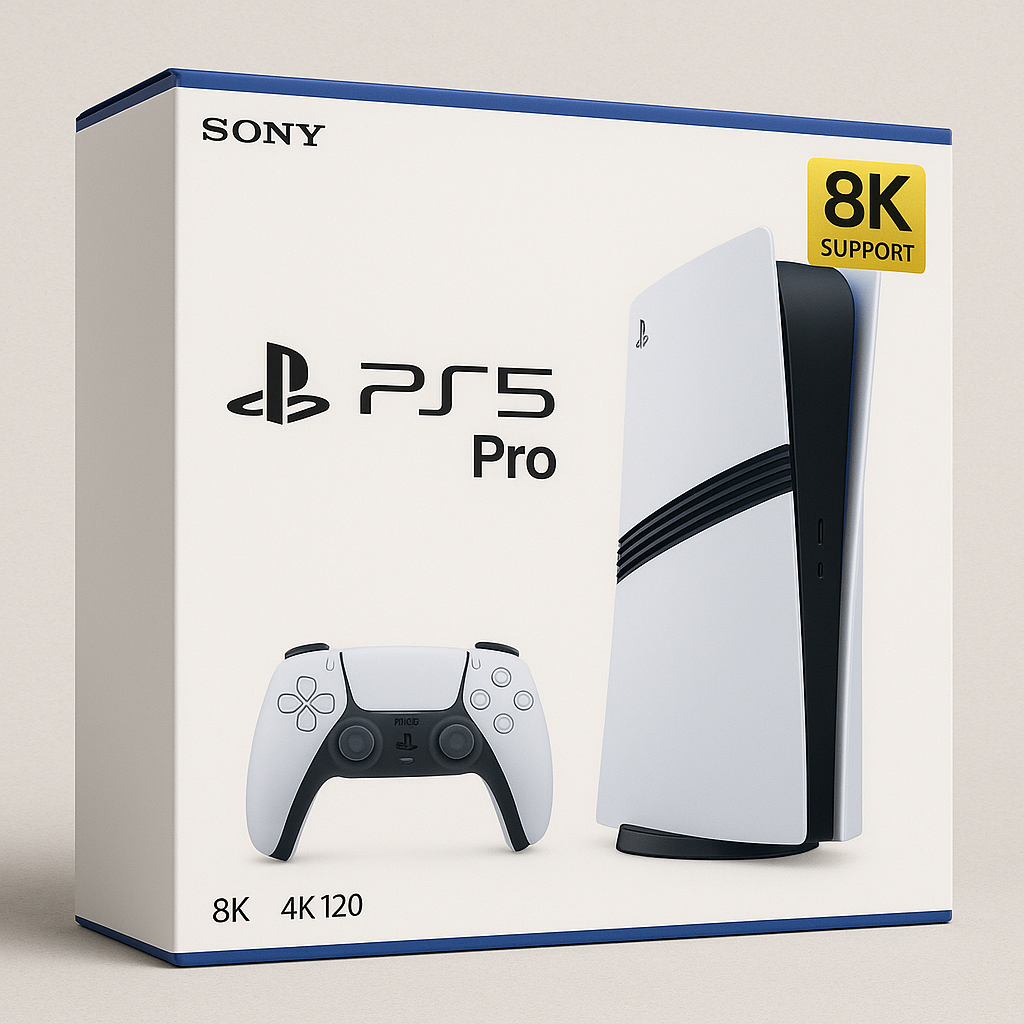
PS5 Pro and 8K: Hype vs Reality
13 May, 2025
If you’ve ever unboxed a PS5 Pro, you’ve probably seen that shiny “8K” logo stamped somewhere on the box. It’s big, it’s bold, and it sounds futuristic as hell. But here’s the thing, that 8K badge is more marketing flex than gameplay reality. Let’s unpack what “8K support” really means for the PS5 Pro, and whether you’re actually going to be gaming in Ultra-Mega-Crystal-High-Definition anytime soon. Can the PS5 Pro Do 8K? Technically? Yes.Practically? Not really! The PS5 Pro can output 8K resolution, but only if the game supports it and if you’ve got an 8K TV. That’s a very big “if,” multiplied by two. And here's the thing, almost no PS5 games are developed to run natively at 8K. Why? Because rendering a full modern game at 8K is like asking your console to sprint a marathon while juggling flaming swords. It’s just not efficient, or necessary, for most developers. Why Developers Don’t Bother with 8K (Yet) Let’s be real, game devs aren’t trying to melt your console. They’re focused on: 4K resolution at higher frame rates (60fps, 120fps) Better ray tracing Faster load times Stable performance 8K textures and assets are massive, and the performance cost isn’t worth the payoff, especially when most players don’t even own 8K displays. The math just doesn’t add up. So What’s the 8K Label Actually Mean? In reality the 8K label just means that the PS5 Pro can output an 8K signal, not that games are rendered at 8K. Think of it like this... you’ve bought a sports car that can hit 300km/h. But you’re still driving it through rush hour traffic at 80. The potential is there, but the road (or in this case, the software) isn’t ready for it. Where 8K Actually Shows Up: Photo Modes The closest you’ll get to 8K content on PS5 Pro today? Photo mode. Games like: Spider-Man 2, Horizon Forbidden West, Gran Turismo 7 and others let you snap ultra high res screenshots. These images are rendered frame by frame, not in real time, so they can hit crazy pixel counts without killing your console. It’s awesome for wallpaper lovers and virtual photographers, but it’s not actual 8K gameplay. The Future of 8K Gaming on Consoles Will we ever see real 8K gaming on consoles like the PS5 Pro? Maybe. But probably not anytime soon. Most developers aren’t designing for it, and even Sony isn’t pushing it. The latest updates and marketing around the PS5 Pro focus on: 4K fidelity mode enhancements New ray tracing features AI upscaling (like PlayStation Spectral Super Resolution) …not 8K gameplay. The focus is on smarter rendering not higher pixel counts. So, Should You Care About 8K on PS5 Pro? Honestly? Not right now. You’re better off caring about frame rate, ray tracing, load speeds, and visual stability. That’s where the PS5 Pro is really delivering. 8K is just a cherry on top for future proofing. A nice sticker to slap on the box, but not something you'll experience in most games anytime soon. Still holding out for native 8K gameplay? Or are you happy with 4K? Let’s talk in the comments and until next time, stay golden!
What Kind of Gamer Are You? PlayStation 5 Edition
25 Apr, 2025
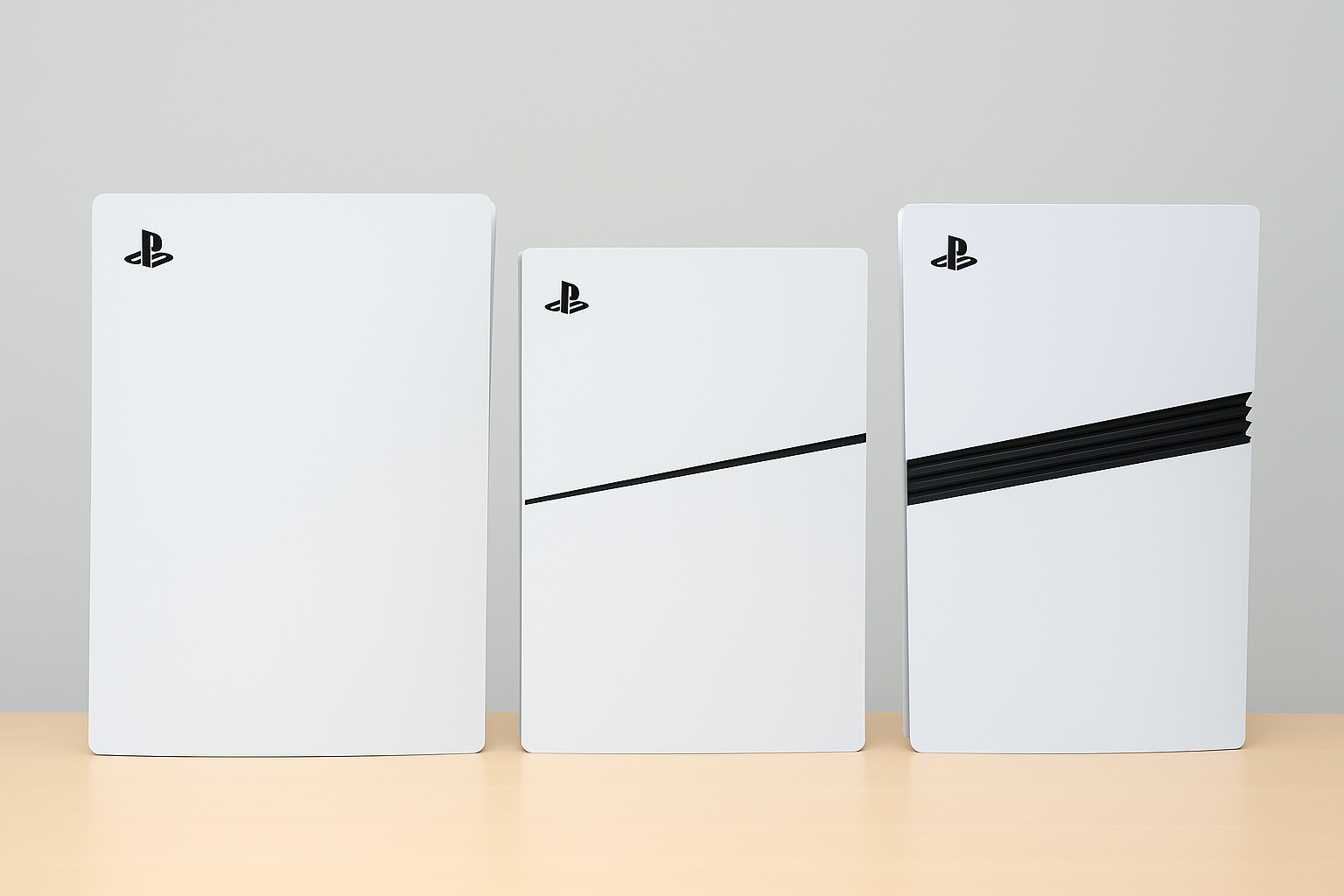
When it comes to gaming there’s something for everybody. Whether you fancy playing in 8K, you fancy high base storage or like only playing digital games, you’re spoiled for choice and what you choose says a lot about who you are. Let's get into it and see what kind of gamer you are: PlayStation 5 Edition. NB//: The gamer you are is subject to budget!!! You may have the heart and soul of a PS5 Pro gamer but the wallet of a PS3 gamer. It be like that. Okay.. let’s get into it! PS5 Pro 2 TB Digital: Alright, let’s start with the big bazu of PS5’S, the PS5 Pro 2TB Digital. What a unit. If you’re grabbing this powerhouse, chances are you’re not just a gamer you’re a hardcore gamer. You don’t mess around when it comes to performance. You need the best of the best. You want those stunning 8K visuals, buttery smooth gameplay, and a storage space that can keep up with your ever-growing digital game library. You need speed, power, and convenience and the PS5 Pro delivers all that and more! But here’s the kicker when you go for the Pro, it’s not just about the gameplay. No, no. You’re flexing. You’re not just buying a console, you’re investing in something that stands out in your entertainment setup and showing that you have the big bucks to afford it. And if you ever feel the urge to show off even more, you’re grabbing that disc drive not for playing physical games (who does that anymore?), but to proudly display your collection, because sometimes, the flex is in the display. You, my friend, are here to show them who’s boss. PS5 Slim 1TB Disc: If you’re going for the PS5 Slim 1TB Disc, you’re the practical gamer. You want the best of both worlds the ease of digital gaming and the flexibility of physical discs. You’re not here to make a statement with your setup, but you do want a console that gives you the freedom to switch between digital and disc without breaking a sweat. You value performance, but you also like keeping things compact I get it. You don’t need the massive storage or the most elite specs, but you do want a console that’s ready for whatever the future throws at you. A disc drive for game sharing? You’ve got it. A sleek design that doesn’t take up your entire living room? You’ve got that too. You’re all about balance getting everything you need without going overboard. PS5 Slim 1TB Digital: Finally, the PS5 Slim 1TB Digital. Ah, the minimalist gamer. This is where convenience meets sleek design. You like things simple no physical discs, just easy, efficient digital downloads. You’re not interested in clutter. You’re all about that clean, modern aesthetic, and this console fits right into your life. You value speed, you value storage, and you want all of that in a streamlined, space-saving package. You’re the kind of gamer who’s looking for a next-gen console that’s easy to set up, looks good in your space, and doesn’t require a ton of extra accessories. No frills, just pure performance because who needs a physical disc drive when everything you need is in the cloud? Convenience is key for you, and this is your perfect fit. Honorable Mention: PlayStation 5 Standard PS5 Standard gamers, I know you thought I forgot about you. As a PS5 Standard gamer, you’re a rare find, you’re the simple gamer, the OG gamer. You probably got the PS5 around the time it first came out and didn't bother to upgrade to the Slim or Pro because it did the job and that’s good enough. You don’t need a whopping 1TB of storage, you don’t care for a lighter console as long as it works, you’re good! It’s the down-to-earth choice for gamers who appreciate a reliable, no-fuss experience. So which one are you? The hardcore gamer with the flex, the practical gamer who values balance, the minimalist gamer, or the often left out simple gamer?

Why Certain Video Game Genres Dominate Specific Regions
28 Nov, 2024
Have you ever noticed how some games are huge in one part of the world but barely get 5 players in another? Here’s why certain genres rule different regions. In East Africa, Kenya in particular, FC is massive. Football is practically a lifestyle here, with fierce loyalty to teams and players fueling the hype. This passion translates into the virtual world, where players go head-to-head as their favorite clubs, right from the couch. And while many Kenyan gamers play other games besides FC, there are way more FC players sweating their asses off in arcades. In North America, shooters and action-packed titles are what’s hot. Call of Duty and Fortnite are top choices, and this kinda ties back to American pop culture, which loves high-intensity, fast-paced entertainment—think blockbuster movies and high-adrenaline sports. NBA 2K, UFC 5, and Madden are also huge in the USA for the same reasons. There’s also the social side of multiplayer gaming, where friends team up or face off, making it a social staple. In Southeast Asia, MMORPGs like Dota 2 and League of Legends are the staple. Many players here love competitive, team-based games that require skill and strategy. eSports is huge in Asia too, with national pride and major tournaments driving a strong community. Low PC hardware costs in the region have also helped grow the genre. So Europe has an interesting mix of genres, but it leans heavily toward simulation games like Football Manager and Farming Simulator. In countries like Germany, realistic, detail-rich simulations are all the hype, while Football Manager speaks to Europe’s love for football. Finally, South America. Do I even need to…it’s FC. I mean, in Brazil and Argentina, football is a religion. What else were they going to play? Each region’s favorite genre reflects its culture, values, and sometimes, access to tech—gaming is global, but the trends are different. Do you think all this will change? And if so, when? Let’s talk about it in the comments, and until next time, stay golden.